

What’s The Best Way To Ensure Proper Ventilation on a Commercial Building
Understanding Ventilation Requirements for Commercial Flat Roofing Systems in North Carolina
When commercial building owners think about their roofing systems, ventilation rarely tops the list of concerns. Yet proper roof ventilation plays a critical role in building performance, energy efficiency, and the longevity of roofing materials. For commercial properties throughout North Carolina, where hot, humid summers and variable winter conditions create unique challenges, understanding and implementing proper roof ventilation can mean the difference between a roofing system that performs reliably for decades and one that fails prematurely.
Unlike residential steep-slope roofs where attic ventilation follows well-established principles, commercial flat roof ventilation involves more complex considerations. The type of roof assembly, insulation placement, building use, and climate conditions all influence ventilation requirements and strategies. Some commercial roof systems require no ventilation at all, while others demand carefully engineered ventilation to prevent moisture accumulation and thermal stress.
For building owners managing commercial properties in Raleigh, Durham, Greensboro, Winston-Salem, and throughout North Carolina, understanding these ventilation principles helps ensure optimal building performance while protecting roofing investments.
Understanding Commercial Roof Ventilation Fundamentals
Ventilation in commercial roofing serves several critical functions that directly impact both building performance and roof system longevity.
Moisture Control: The primary purpose of roof ventilation is managing moisture within the roof assembly. Moisture can enter roof systems from interior sources (cooking, bathing, manufacturing processes) or exterior sources (rain infiltration, condensation). Without proper ventilation or vapor control, this moisture becomes trapped within insulation or between roofing layers, causing insulation degradation, metal deck corrosion, membrane deterioration, and potential mold growth.
Temperature Regulation: Ventilation helps moderate temperature extremes within roof assemblies. During summer, ventilation can reduce heat buildup in roof cavities, decreasing the thermal load on roofing membranes and reducing cooling costs. In winter, proper ventilation prevents warm interior air from creating condensation when it contacts cold roof surfaces.
Pressure Equalization: Ventilation allows air pressure equalization across the roof assembly, reducing stress on membranes during wind events and helping prevent membrane billowing or separation from the substrate.
Extended Material Life: By controlling moisture and moderating temperature extremes, proper ventilation extends the service life of roofing materials, insulation, and structural components. Roofing systems with appropriate ventilation or vapor control strategies consistently outperform poorly designed assemblies.

Ventilated vs. Unventilated Commercial Roof Systems
One of the most important concepts for commercial building owners to understand is that not all commercial roofs require ventilation. In fact, most modern commercial flat roof systems are designed as “unventilated” assemblies where moisture control is achieved through proper vapor retarder placement and material selection rather than air movement.
Unventilated Roof Assemblies: The majority of commercial flat roofs use unventilated designs where insulation is placed directly above the roof deck with the membrane installed over the insulation. These “compact” roof assemblies control moisture through carefully designed vapor retarder systems that prevent interior moisture from reaching cold surfaces where condensation could occur.
Unventilated assemblies offer several advantages: simpler construction with fewer components, better energy performance through continuous insulation, reduced air leakage compared to ventilated systems, and fewer penetrations that could compromise waterproofing. When properly designed with appropriate vapor retarders, these systems perform excellently in most commercial applications.
Ventilated Roof Assemblies: Some commercial roof situations benefit from ventilated designs where an air space exists between the insulation layer and the roof deck, allowing air movement through vents at the roof perimeter or through ridge vents. These systems are sometimes used for retrofit applications over existing roof systems, buildings with high interior humidity, or situations where vapor retarder installation is impractical.
Ventilated assemblies require careful design to ensure adequate airflow paths, proper vent sizing and placement, and protection against wind-driven rain or snow infiltration. The ventilation space must be sufficient to allow meaningful air movement while maintaining structural integrity.
Critical Factors in Ventilation Decision-Making
Determining whether your commercial roof requires ventilation and what type of system is appropriate depends on several interrelated factors.
Building Use and Interior Conditions: The intended use of your building significantly impacts ventilation requirements. Facilities with high interior humidity – restaurants, commercial kitchens, laundries, indoor pools, manufacturing processes involving water or steam – generate substantial moisture that must be managed. These buildings typically benefit from robust vapor retarder systems and may require ventilated roof assemblies in some cases.
Conversely, office buildings, retail spaces, and warehouses with climate-controlled environments and lower humidity levels perform well with standard unventilated roof assemblies and appropriate vapor retarders.
Climate Considerations: North Carolina’s climate creates specific ventilation considerations. The state’s hot, humid summers mean exterior air often contains more moisture than interior conditioned spaces – the opposite of cold northern climates. This humidity pattern affects vapor retarder placement and ventilation strategies.
Winter conditions in North Carolina, while milder than northern states, still create temperature differentials that can cause condensation if roof assemblies aren’t properly designed. The frequent temperature cycling between freezing and above-freezing conditions requires attention to moisture management.
Insulation Type and Placement: The type of insulation used and where it’s positioned within the roof assembly dramatically affects ventilation requirements. Spray foam insulation applied directly to the underside of the roof deck creates an unventilated assembly by design, eliminating the need for separate ventilation. Board insulation placed above the deck in a compact roof assembly similarly doesn’t require ventilation when properly designed with vapor retarders.
However, if insulation is placed below the deck (between interior and deck), ventilation above the insulation may be necessary to prevent condensation on the deck’s underside.
Roof Assembly Type: Different roofing membrane systems have varying permeability characteristics that influence moisture management strategies. Modified bitumen and built-up roofing systems are essentially impermeable to moisture vapor, creating effective vapor barriers at the top of the assembly. Single-ply membranes (TPO, PVC, EPDM) have different permeability characteristics that must be considered in assembly design.
Existing vs. New Construction: New construction offers opportunities to design optimal roof assemblies with proper vapor retarder placement and insulation strategies. Retrofit projects often must work within existing conditions, potentially requiring ventilation solutions that wouldn’t be necessary in new construction.
Implementing Proper Vapor Retarder Systems
For most commercial flat roof applications in North Carolina, proper moisture control comes from well-designed vapor retarder systems rather than ventilation.
Understanding Vapor Retarders: Vapor retarders (also called vapor barriers, though “retarder” is more technically accurate) are materials that resist moisture vapor transmission through the building assembly. They’re rated by permeance – the lower the perm rating, the more resistant to vapor transmission.
In commercial roofing, vapor retarders are typically placed on the warm side of the insulation (generally on top of the roof deck in most climates) to prevent interior moisture from migrating upward into the insulation where it could condense on cold surfaces.
Material Selection: Common vapor retarder materials for commercial roofs include self-adhering modified bitumen sheets, mechanically attached reinforced sheets, liquid-applied membranes, and certain rigid insulation boards with low permeability. The appropriate choice depends on roof assembly design, substrate conditions, and project budget.
Installation Quality: Even the best vapor retarder materials fail if poorly installed. All seams must be properly lapped and sealed, penetrations must be carefully detailed, and the vapor retarder must be continuous across the roof area. Any gaps or holes compromise the system’s effectiveness.
Design Considerations for North Carolina: In North Carolina’s climate, vapor retarder design must account for both cooling-dominated conditions (where interior spaces are cooler and drier than exterior) and occasional heating season conditions. This dual requirement means vapor retarders must be carefully selected – too impermeable and they may trap moisture during cooling season; too permeable and they may allow excessive moisture infiltration during heating season.
Consulting with roofing professionals experienced in North Carolina’s specific climate conditions helps ensure vapor retarder systems are appropriately designed for local requirements.
Ventilation Strategies When Required
For commercial roof situations where ventilation is appropriate or necessary, several strategies can provide effective moisture management.
Perimeter Soffit and Ridge Ventilation: Similar to residential applications, some commercial roofs use perimeter soffit vents for air intake combined with ridge vents or roof-edge exhaust vents for air outlet. This creates continuous airflow through the ventilated space, carrying moisture vapor away.
This approach works best for smaller commercial buildings with simple roof geometries. Large roofs or complex shapes may not achieve adequate airflow across the entire roof area with perimeter ventilation alone.
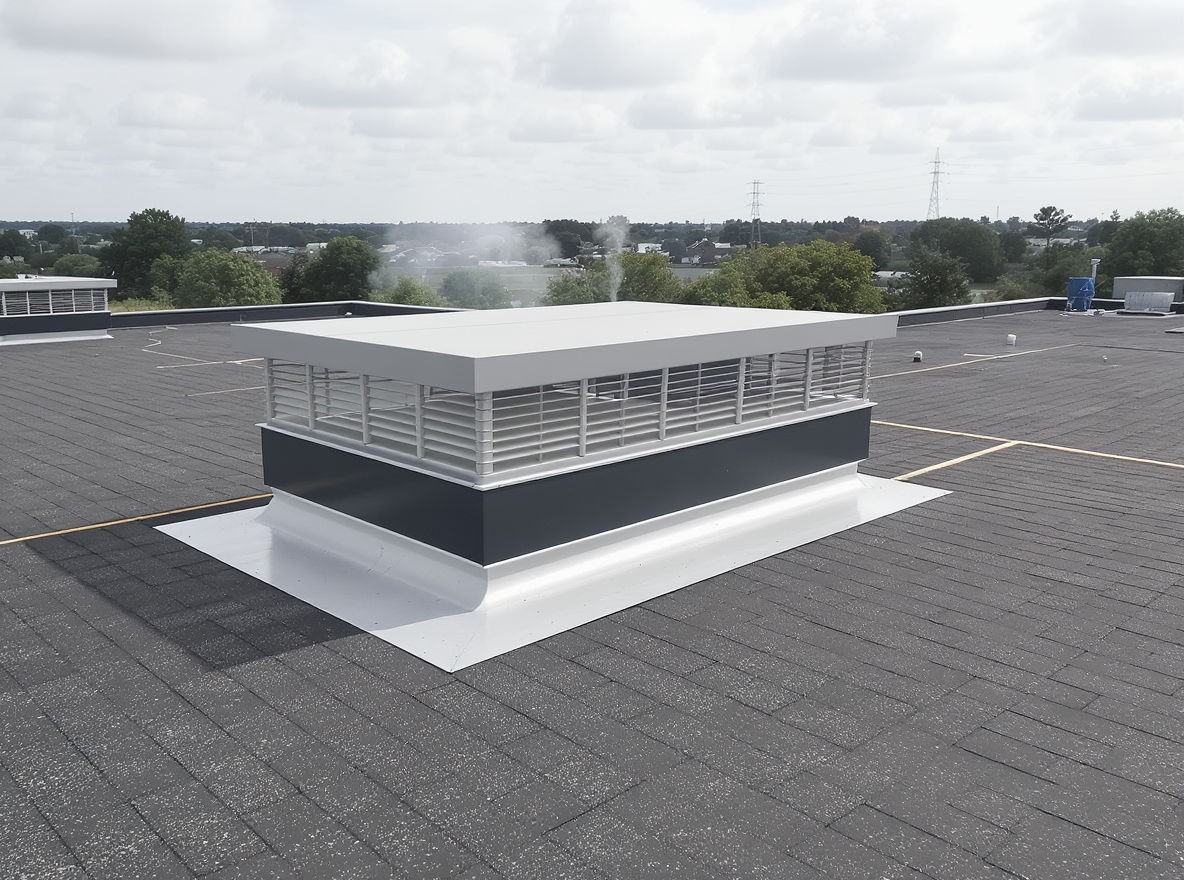
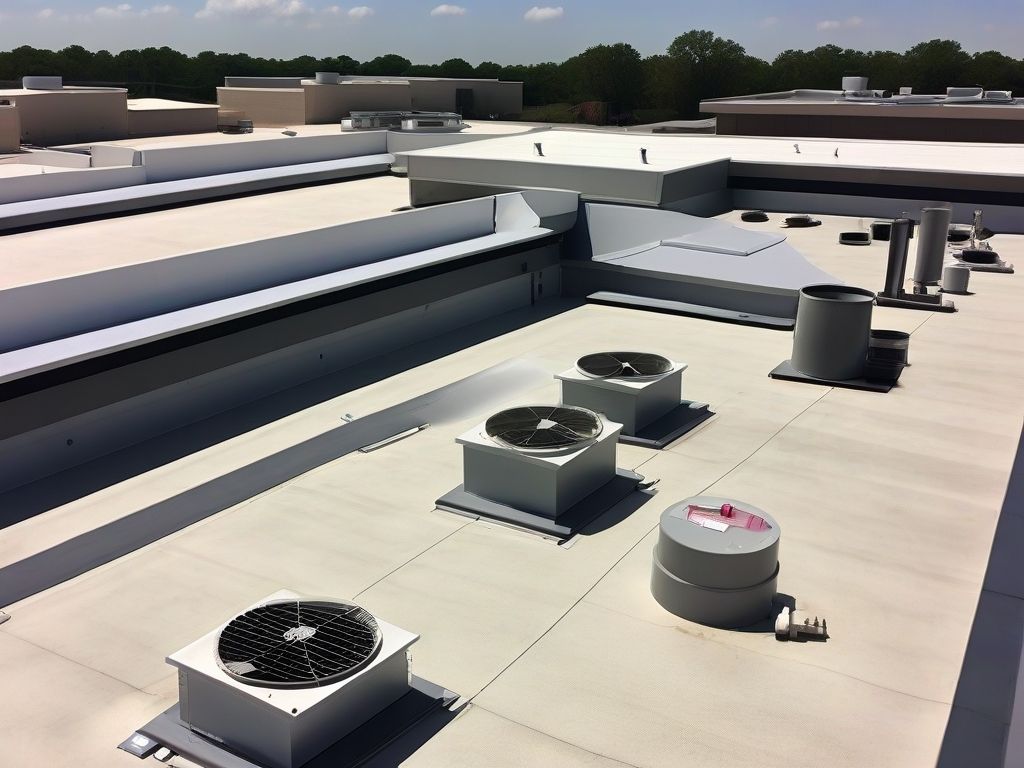
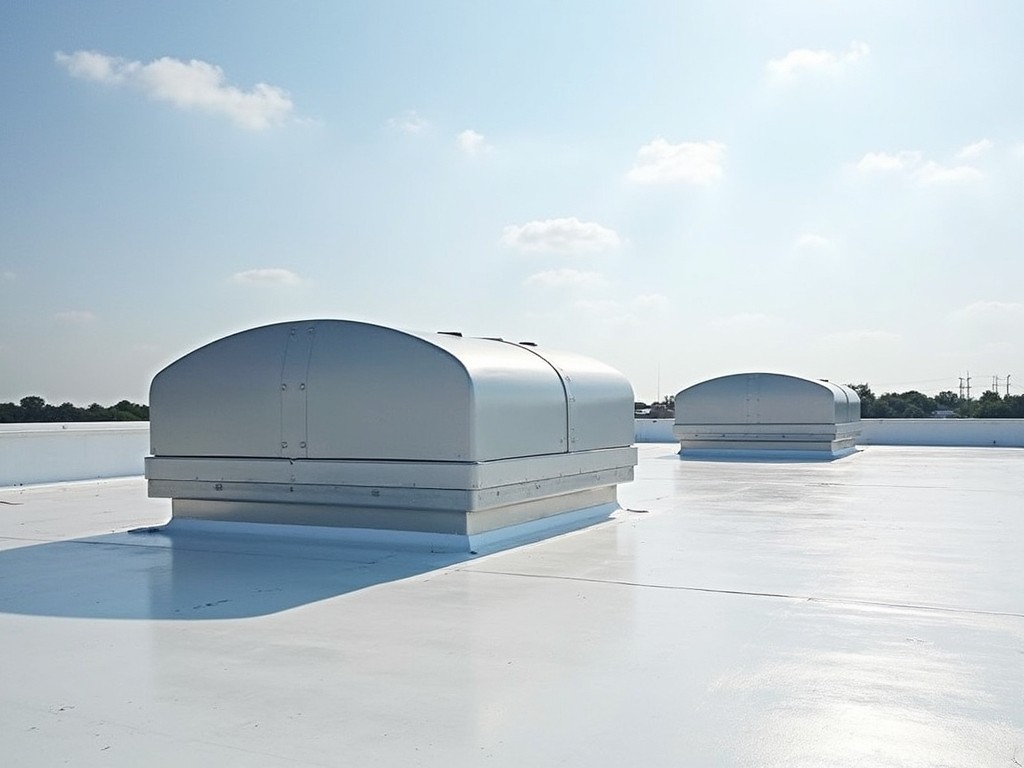
Roof Ventilators and Turbines: Mechanical or wind-driven roof ventilators can supplement or replace ridge venting, particularly on large commercial roofs where perimeter ventilation proves insufficient. These devices create negative pressure that draws air from the ventilated roof space, promoting air circulation.
Proper spacing and sizing of roof ventilators is critical – too few ventilators provide insufficient air changes, while excessive penetrations create unnecessary waterproofing challenges.
Mechanical Ventilation: Some commercial applications use powered ventilation fans to force air movement through roof assemblies. This approach provides consistent ventilation regardless of wind conditions and can be controlled by humidistats or thermostats to operate only when needed.
Mechanical ventilation adds complexity, energy consumption, and maintenance requirements but may be necessary for buildings with exceptional moisture loads or specific process requirements.
Air Gaps and Ventilation Channels: Creating effective air gaps within roof assemblies requires careful attention to spacing and air pathway design. Ventilation spaces must be at least 1-2 inches clear height to allow meaningful airflow. Blocking or insulation that obstructs airflow defeats the ventilation system’s purpose.
Special Considerations for North Carolina Commercial Buildings
North Carolina’s climate and building patterns create specific ventilation considerations that building owners should understand.
Humidity Management: The state’s high humidity levels mean that during cooling season, exterior air often contains more moisture than interior conditioned spaces. This reverses the typical moisture drive direction compared to northern heating climates. Ventilation strategies must account for this seasonal variation, ensuring systems don’t inadvertently introduce moisture into roof assemblies during humid summer months.
Condensation Risk Periods: While North Carolina’s winters are mild compared to northern states, the region does experience periods where interior heating creates temperature differentials sufficient to cause condensation. These risk periods typically occur during cold, clear winter nights when roof surfaces radiate heat to the sky and drop below interior air temperatures.
Proper vapor retarder design prevents interior moisture from reaching these cold surfaces. However, in buildings with high interior humidity or inadequate vapor retarders, ventilation may be necessary to remove moisture that escapes into roof assemblies.
Hurricane Considerations: Coastal and Piedmont areas of North Carolina face hurricane threats that create specific ventilation design requirements. Ventilation openings must be protected against wind-driven rain during severe storms. Excessive or poorly designed ventilation can actually increase wind uplift forces on roofing systems during high-wind events.
Building codes in hurricane-prone regions include specific requirements for ventilation design and vent protection. Ensure any ventilation systems comply with local wind and water infiltration requirements.
Building Energy Codes: North Carolina has adopted energy conservation codes that specify minimum insulation R-values and address thermal bridging, air leakage, and vapor control. Roof ventilation designs must work within these energy code requirements, providing necessary moisture management without compromising energy performance.
Diagnosing Ventilation Problems in Existing Buildings
Building owners managing existing commercial properties should watch for signs that may indicate ventilation or moisture control problems.
Interior Signs: Water staining on interior ceilings, particularly near perimeter walls or at deck seams, may indicate condensation within the roof assembly. Peeling paint or deteriorating ceiling finishes can signal moisture problems. Musty odors or visible mold growth definitively indicate moisture issues requiring investigation.
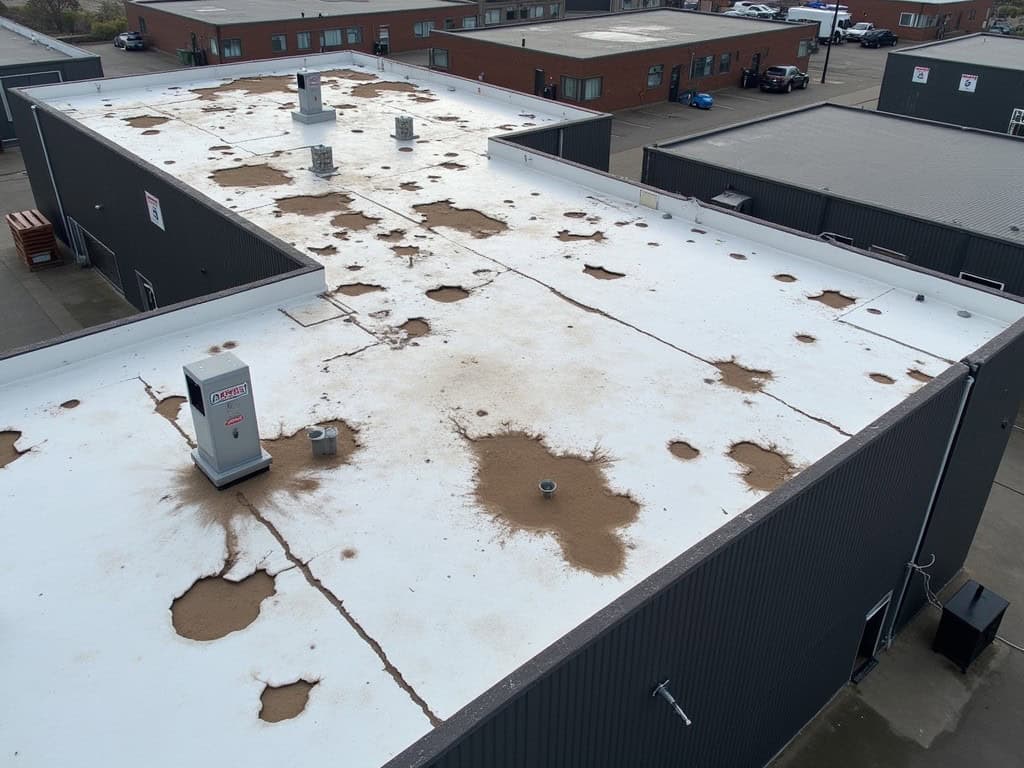
Roof Surface Indicators: Bubbling or blistering in the roofing membrane can indicate moisture trapped beneath the membrane. While this can result from various causes, inadequate vapor control or ventilation represents a common culprit. Premature membrane deterioration, particularly if uniform across the roof rather than localized, may signal moisture-related problems.
Insulation Assessment: During roof inspections or repairs, examine insulation condition. Wet, compressed, or deteriorated insulation indicates moisture infiltration. Insulation that’s wet at the bottom (near the deck) but dry on top suggests moisture is coming from the building interior – exactly the situation proper vapor retarders or ventilation should prevent.
Structural Concerns: Rust or corrosion on metal roof decks, particularly on the deck’s underside, indicates prolonged moisture exposure. Similarly, deterioration of wood components within roof assemblies signals moisture problems requiring attention.
Professional Assessment and Design
Given the complexity of commercial roof ventilation and moisture control, professional assessment and design provides critical value for building owners.
Roof Inspections: Comprehensive roof inspections by experienced commercial roofing contractors should evaluate not just the membrane condition but also signs of moisture problems, adequacy of existing vapor retarders, and whether ventilation strategies are appropriate for the building’s use and conditions.
Thermal imaging can identify areas of wet insulation or air leakage that may indicate ventilation or moisture control deficiencies. Moisture meters provide direct measurement of moisture content in insulation and roof assemblies.
Engineering Analysis: Complex buildings, those with high interior humidity, or situations with existing moisture problems may benefit from engineering analysis. Hygrothermal modeling can predict how moisture will move through roof assemblies under various conditions, helping optimize vapor retarder placement and determine whether ventilation is necessary.
Retrofit Solutions: When existing buildings show moisture problems related to inadequate ventilation or vapor control, experienced roofing contractors can recommend retrofit solutions. These might include adding vapor retarders during roof replacement, installing ventilation systems, improving interior humidity control, or redesigning roof assemblies to address specific conditions.
Maintenance Considerations for Ventilated Systems
Buildings with ventilated roof systems require specific maintenance attention to ensure ventilation continues functioning properly.
Vent Inspection and Cleaning: Soffit vents, ridge vents, and roof ventilators can become blocked by debris, bird nests, or insect activity. Regular inspection and cleaning maintain proper airflow. This is particularly important in North Carolina where pine pollen in spring can accumulate and potentially block ventilation openings.
Screen Maintenance: Ventilation openings should include screens to prevent pest entry. Inspect screens for damage or deterioration and repair or replace as needed. Damaged screens allow insects, birds, or small animals into roof assemblies, creating additional problems.
Air Path Verification: During roof maintenance or repair work, verify that air pathways within ventilated assemblies remain clear. Insulation can shift or compress, blocking ventilation channels. Rooftop work by other contractors (HVAC, electrical) can inadvertently obstruct air paths if workers aren’t aware of ventilation requirements.
Moisture Monitoring: Buildings with ventilated roof systems should include periodic moisture monitoring to verify the ventilation is effectively managing moisture. This might include visual inspections for condensation or water staining, moisture meter readings of insulation, or periodic thermal imaging surveys.
The Role of Professional Roofing Contractors
Ensuring proper roof ventilation requires expertise that building maintenance staff typically don’t possess. Professional commercial roofing contractors provide critical services throughout the building lifecycle.
Design Consultation: During new construction or roof replacement projects, experienced roofing contractors help evaluate ventilation requirements, recommend appropriate vapor retarder systems, and design ventilation strategies when necessary. Their experience with similar buildings in North Carolina’s climate provides valuable perspective on what strategies perform best.
Installation Expertise: Proper installation of vapor retarders and ventilation systems requires specialized knowledge and attention to detail. Professional roofing contractors understand critical details like vapor retarder sealing, vent sizing and placement, and integration with other roof components.
Problem Diagnosis: When moisture problems appear, experienced contractors can diagnose root causes and recommend effective solutions. Their understanding of how roof assemblies perform helps distinguish between ventilation issues, vapor retarder failures, membrane leaks, or other problems with similar symptoms.
Ongoing Maintenance: Professional roof maintenance programs include attention to ventilation system function, ensuring vents remain clear, screens stay intact, and air pathways continue functioning properly.
The Flat Roof Specialists: Ventilation Expertise for North Carolina Commercial Buildings
For over two decades, The Flat Roof Specialists have helped North Carolina commercial building owners navigate the complexities of roof ventilation and moisture control. Serving Raleigh, Durham, Greensboro, Winston-Salem, High Point, Burlington, Chapel Hill, Fayetteville, and throughout North Carolina, their team brings specialized expertise in commercial flat roofing systems that general contractors cannot match.
Whether you’re planning new construction and need guidance on ventilation requirements, managing an existing building with moisture concerns, considering roof replacement and want to ensure proper vapor control, or need professional assessment of current roof conditions, The Flat Roof Specialists provide the expertise North Carolina businesses have trusted since 2000.
Their experience with all major commercial roofing systems – PVC, TPO, EPDM rubber, modified bitumen, and built-up roofs – means they understand the specific ventilation and moisture control requirements for each system type. They work with building owners to develop ventilation strategies appropriate for specific building uses, occupancy types, and North Carolina’s unique climate conditions.
As a family-owned business with an A+ Better Business Bureau rating, they’re committed to the long-term relationships that come from delivering quality service and standing behind their work. Their licensed, bonded, and insured team provides professional expertise you can trust for critical building infrastructure decisions.
Taking Action: Protecting Your Commercial Roof Investment
Proper roof ventilation and moisture control aren’t glamorous topics, but they directly impact your building’s performance, operating costs, and roof system longevity. Building owners who understand these principles and work with experienced professionals to implement appropriate strategies protect their investments while avoiding costly moisture-related problems.
If you’re uncertain whether your commercial roof has adequate ventilation or proper vapor control, schedule a comprehensive professional inspection. The Flat Roof Specialists can assess your current roof assembly, identify any moisture concerns, and recommend appropriate solutions based on your building’s specific conditions and requirements.
For new construction or roof replacement projects, invest time in proper ventilation and vapor control design before construction begins. The modest additional effort during planning prevents expensive problems that can develop when roof assemblies are poorly designed for moisture management.
Don’t wait for moisture problems to become visible before addressing ventilation and vapor control. By the time interior damage appears, roof assemblies may have suffered significant deterioration requiring expensive repairs or premature replacement.
Contact The Flat Roof Specialists Today
 Whether you need ventilation assessment for an existing building, design consultation for new construction, moisture problem diagnosis and solutions, or comprehensive roof maintenance that includes ventilation system care, The Flat Roof Specialists bring the expertise and experience North Carolina commercial property owners need.
Their team understands the unique challenges of managing commercial flat roofs in North Carolina’s climate and can help ensure your roofing system includes appropriate ventilation and moisture control strategies for long-term reliable performance.
Contact The Flat Roof Specialists today to discuss your commercial roofing ventilation needs and discover how their comprehensive approach to roof design, installation, and maintenance can protect your North Carolina business investment for decades to come.