

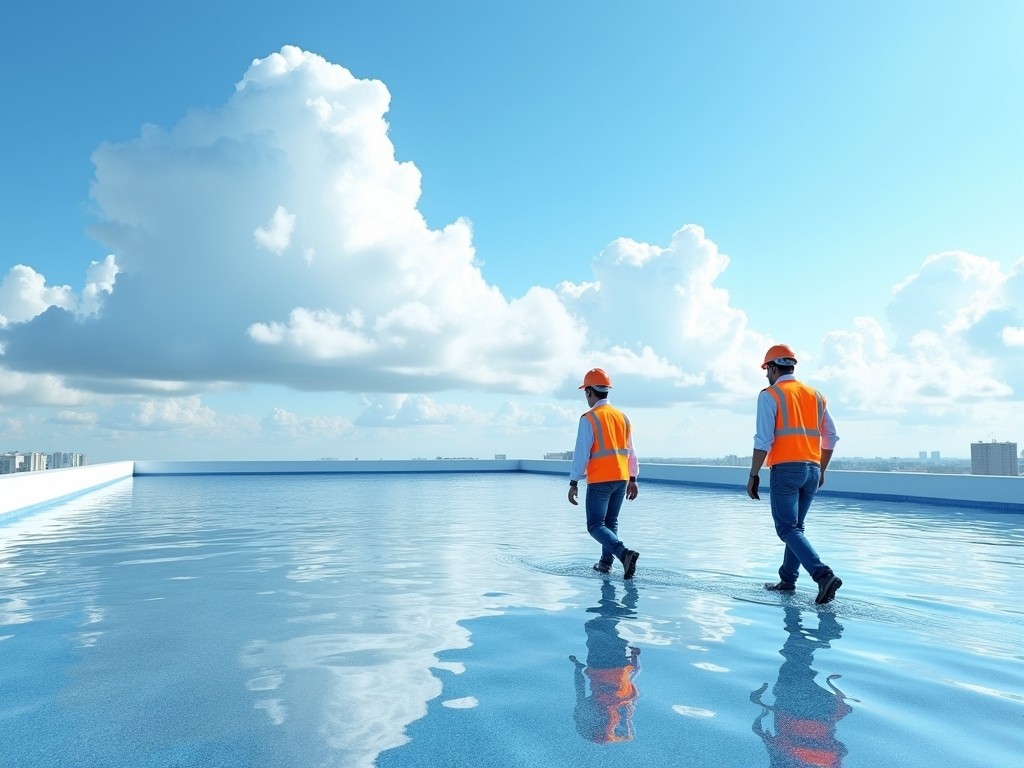
What Are the Causes of Ponding on a Flat Roof?
Understanding and Preventing Standing Water Issues on North Carolina Commercial Roofs
TL;DR – Key Points:
- Ponding defined – Water remaining on roof surface 48+ hours after rainfall, indicating drainage problems
- Structural settling – Building foundation movement creates low spots where water collects over time
- Poor roof slope – Flat roofs need minimum 1/4″ per foot slope; inadequate slope prevents proper drainage
- Clogged drainage systems – Debris-blocked drains and scuppers prevent water from leaving the roof surface
- Compressed insulation – Foot traffic and equipment weight create depressions that trap water
- Serious consequences – Accelerates membrane deterioration, damages structure, risks collapse if unaddressed
- Professional solutions required – Permanent fixes demand expert assessment and proper drainage correction
For commercial building owners throughout North Carolina, ponding water represents one of the most common yet potentially damaging problems affecting flat roofing systems. When water remains standing on your roof surface for 48 hours or more after rainfall, you have a ponding problem that demands attention. While flat roofs are designed to handle brief water accumulation during and immediately after storms, persistent standing water accelerates roof deterioration, compromises structural integrity, and ultimately shortens your roof’s service life.
Ponding water isn’t just an aesthetic concern or minor maintenance issue. Left unaddressed, it creates a cascade of problems: premature membrane deterioration and failure, accelerated UV damage to roofing materials, increased structural load that stresses the building, saturated insulation that loses effectiveness, interior water damage to ceilings and walls, and potential roof collapse in extreme cases where structural capacity is exceeded.
For property owners managing commercial buildings in Raleigh, Durham, Greensboro, Winston-Salem, and throughout North Carolina, understanding what causes ponding water and how to address it protects your roofing investment and prevents costly damage. This comprehensive guide examines the primary causes of ponding on flat roofs and the solutions that restore proper drainage.
Understanding Ponding Water: Definition and Concerns
Before exploring causes, it’s important to understand exactly what constitutes ponding and why it matters.
What Is Ponding Water?: The roofing industry defines ponding water as standing water that remains on a roof surface 48 hours or more after rainfall ends. This timeframe distinguishes ponding from normal water accumulation during and immediately after storms. Some water remaining briefly on flat roofs is expected – the 48-hour threshold identifies situations where drainage is inadequate.
Water depths in ponding areas typically range from less than an inch to several inches in severe cases. Even shallow ponding causes problems when it persists.
Why Ponding Matters: Standing water creates multiple problems for commercial roofing systems. UV radiation from sunlight penetrates standing water, accelerating membrane degradation. Most roofing membranes are designed for direct sun exposure where UV affects only the surface – standing water magnifies UV damage by allowing it to attack the membrane from multiple angles.
Ponding water also increases roof load. Water weighs approximately 5 pounds per square foot per inch of depth. A large ponding area with 2 inches of water adds thousands of pounds of unintended load to your roof structure. During winter, if ponding water freezes, the weight increases further as ice is denser than water.
Temperature cycling in ponding areas stresses roofing materials. Water heats and cools more slowly than air, creating temperature differentials between ponding areas and the rest of the roof. This differential expansion and contraction can cause membrane stress and eventual failure.
Perhaps most concerning, ponding water often indicates underlying structural or design problems that worsen over time. The weight of standing water can cause progressive deflection – the roof sags more, creating deeper ponding areas that hold more water, which causes additional sagging in a destructive cycle.
When Ponding Becomes Critical: While any persistent ponding deserves attention, certain situations demand immediate action. Ponding areas larger than 50 square feet create substantial additional load and membrane stress. Water depths exceeding 2 inches represent serious structural concerns. Ponding that worsens over time indicates progressive structural problems. Multiple ponding areas across the roof suggest systemic drainage or slope issues.
If you observe ponding combined with visible roof sagging, interior water stains, or membrane damage in ponding areas, professional assessment should occur immediately.
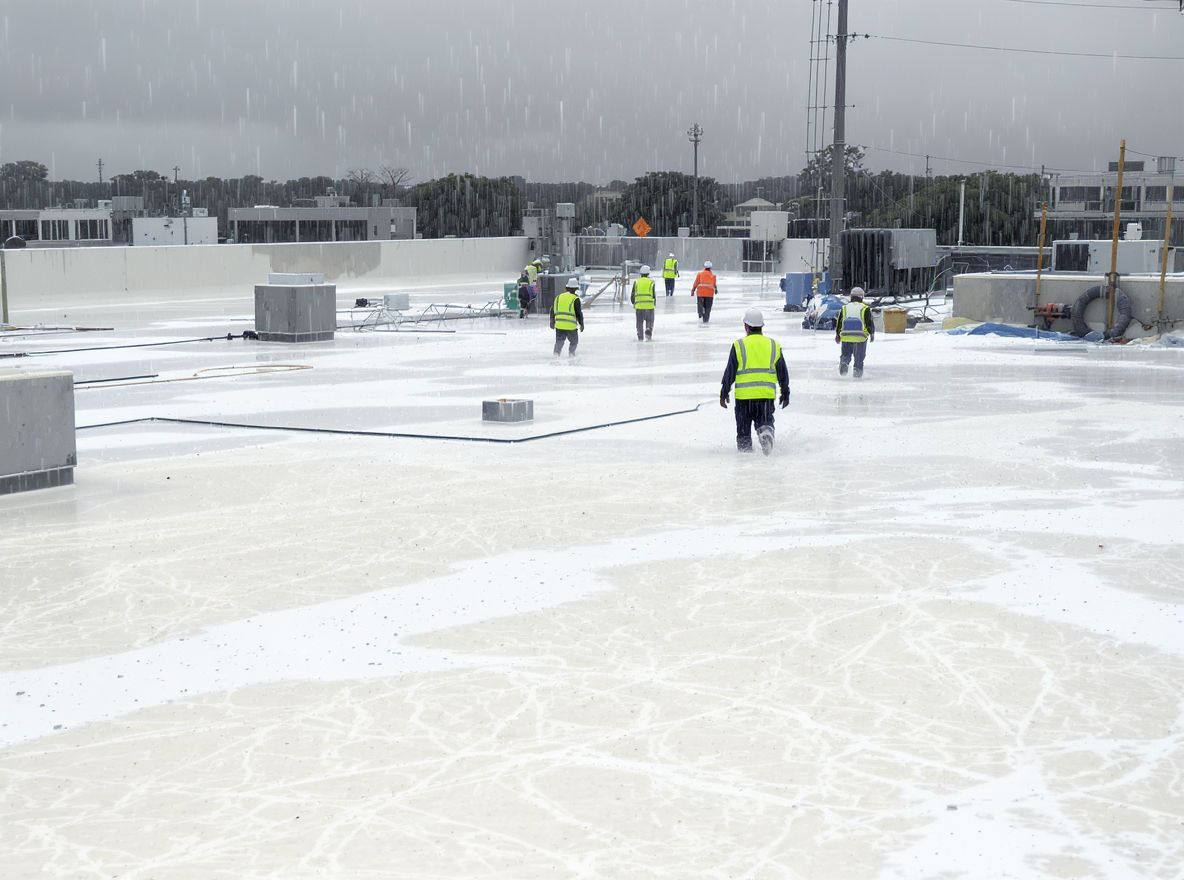
Cause #1: Inadequate Roof Slope
The most fundamental cause of ponding water is insufficient roof slope to promote proper drainage.
Minimum Slope Requirements: Despite being called “flat roofs,” commercial low-slope roofing systems require minimum slope for proper drainage. Industry standards and building codes typically require 1/4 inch of fall per foot (1/4:12 slope) as an absolute minimum. However, this minimum doesn’t account for construction tolerances, structural deflection under load, or long-term settlement.
Best practices recommend 1/2 inch per foot or greater when possible, providing margin for inevitable variations and long-term changes. This increased slope ensures positive drainage even after years of building use, settling, and deflection.
How Slope Problems Develop: Inadequate slope can result from several situations. Original design may have specified minimal or no slope, particularly in older buildings constructed before current drainage standards. Construction execution may have failed to achieve designed slopes – even when plans specify proper slope, field conditions and construction tolerances can result in flatter-than-intended sections.
Some roofs were intentionally built flat based on outdated design approaches or cost-cutting measures. Others had adequate slope initially, but structural deflection and settlement over decades have reduced effective slope to inadequate levels.
Identifying Slope Issues: Professional roof surveys can measure slope across the roof surface using laser levels or other precision equipment. These surveys identify low areas, inadequate slope zones, and areas where water cannot drain effectively.
Visual inspection after rainfall also reveals slope problems. If water stands in areas away from drains or flows in unexpected directions, slope deficiencies likely exist.
Solutions for Slope Problems: Correcting inadequate slope requires adding material to create proper drainage gradients. Tapered insulation systems use progressively thicker insulation panels to create slope without modifying the structural deck. These systems are designed specifically to direct water toward drains while adding insulation value.
For severe slope deficiencies, structural modifications may be necessary. This might include adding crickets (sloped sections) to redirect water flow, installing additional drains in low areas, or in extreme cases, structural deck modifications to create proper slope.
Lightweight fill materials can sometimes build up low areas without excessive structural load, though this approach requires engineering analysis to ensure the structure can support the additional weight.
Cause #2: Clogged or Inadequate Drainage Systems
Even roofs with proper slope pond water if drainage systems can’t handle water volume or are blocked by debris.
Common Drainage Blockages: North Carolina’s vegetation creates constant challenges for roof drainage. Pine needles accumulate particularly quickly and can completely clog drains and scuppers. Leaves, especially during fall months, block drainage openings. Tree seeds, pods, and debris wash onto roofs during storms. Roofing membrane granules that have washed loose can accumulate in drains.
Sometimes the blockage occurs not at the drain itself but in downspouts below the roof level, causing water to back up onto the roof surface even though the drain appears clear from above.
In some cases, drain covers or strainers become clogged while the drain itself remains open. Water cannot pass through the blocked strainer even though the pipe below could handle flow.
Inadequate Drain Capacity: Beyond blockages, some drainage systems simply lack capacity for the roof area they serve. Building codes specify minimum drainage capacity based on roof area and local rainfall intensity. However, older buildings may have drainage systems designed to outdated standards or may have had roof areas expanded without corresponding drainage system upgrades.
North Carolina experiences intense thunderstorms that can deliver 2-3 inches of rain in an hour. Drainage systems must handle these peak flows, not just average rainfall. Inadequately sized systems may work fine during light rain but create ponding during heavy storms.
Poor Drain Placement: Even adequate numbers of properly sized drains cause ponding if poorly located. Drains should be positioned at the lowest points of roof sections, with roof slope directing water toward them. When drains are placed in locations that don’t correspond to the actual low points (either due to design errors or subsequent structural changes), water ponds in areas the drains can’t reach.
Rectangular roof sections should typically have drains in corners where two slopes meet. Long, narrow roofs may require intermediate drains to prevent excessively long water flow paths. Around roof-mounted equipment, additional drains or scuppers may be necessary to handle water diverted by equipment.
Solutions for Drainage Issues: Regular drain cleaning prevents most blockage-related ponding. Professional roof maintenance should include quarterly or semi-annual drain inspection and cleaning, particularly before North Carolina’s rainy spring season and after fall leaf drop.
Installing or improving drain strainers prevents debris from entering drainage systems while still allowing water flow. Modern strainer designs balance debris protection with water capacity.
For capacity issues, adding drains provides the most effective solution. Additional roof drains positioned in problematic areas can eliminate ponding if the roof has adequate slope but insufficient drainage outlets. Scuppers (openings through parapet walls) can supplement roof drains where adding interior drains isn’t practical.
Expanding existing drains to larger sizes increases capacity, though this may require structural modifications and certainly requires coordination with the building’s interior drainage system.
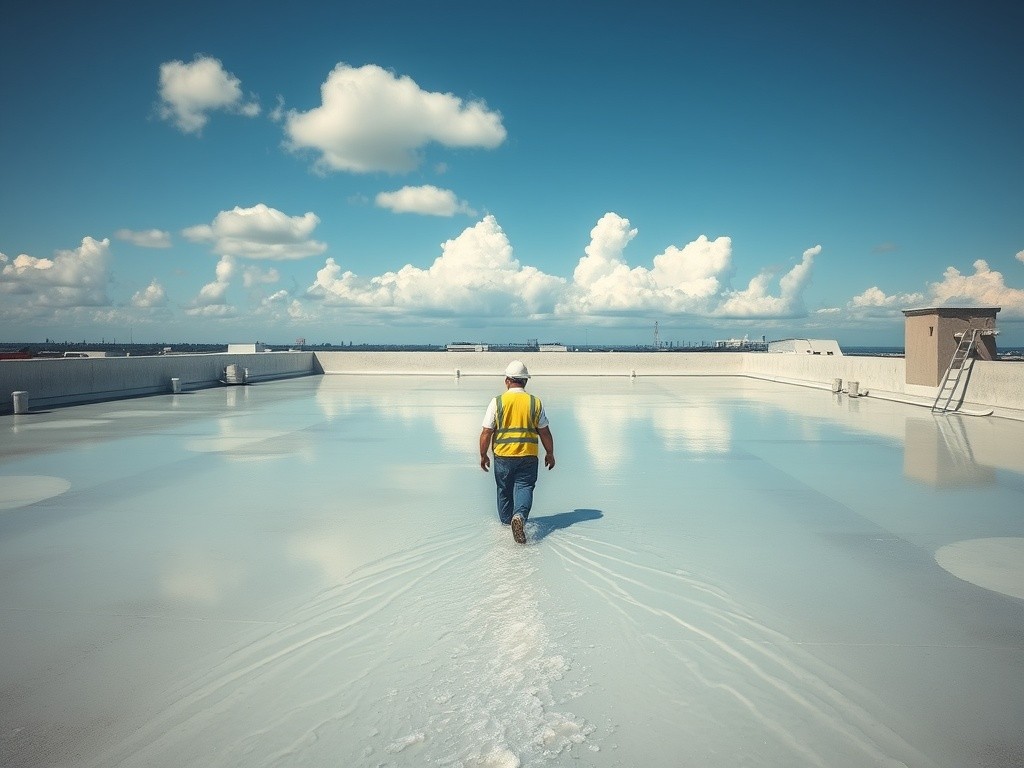
Cause #3: Structural Deflection and Building Settlement
Over time, structural movement creates low areas on roofs that were originally properly sloped.
Understanding Structural Deflection: All building structures deflect (bend or sag) under load. This deflection is normal and anticipated in structural design. However, the deflection that occurs under sustained loads (like roofing systems, equipment, and accumulated snow or water) can create permanent deformation that affects drainage.
Roof decks spanning between structural supports naturally deflect downward at mid-span. Over years of service, this deflection becomes permanent as materials fatigue and creep. What began as a properly sloped roof gradually develops low areas at deck mid-spans between supports.
Long-span roof systems are particularly susceptible to deflection-related ponding. Large retail stores, warehouses, and manufacturing facilities with 30-50 foot structural bays often develop ponding issues as deflection accumulates over decades.
Building Settlement: Beyond roof structure deflection, the entire building can settle unevenly, creating roof drainage problems. Foundation settlement occurs when soil beneath building footings compresses or shifts. In North Carolina, clay soils that expand when wet and contract when dry create ongoing settlement movement. Areas with fill dirt or poorly compacted soil are particularly prone to settlement.
Differential settlement – where different parts of the building settle at different rates – is especially problematic. This creates permanent tilting or sagging that disrupts drainage patterns designed for the building’s original configuration.
Building additions or modifications can also cause settlement-related problems. When new sections are added to existing buildings, the new and old sections may settle differently, creating drainage issues at the transition areas.
Identifying Deflection and Settlement: Professional roof surveys using laser levels can measure actual roof surface elevations, comparing them to original design specifications. Significant deviation from designed slopes indicates deflection or settlement has occurred.
Visual inspection from ground level sometimes reveals obvious sagging, particularly in long-span structures. Interior ceiling observations can also identify deflection – if ceilings sag or water stains appear in patterns suggesting roof depression, deflection is likely occurring.
Addressing Structural Issues: Correcting deflection-related ponding often requires structural reinforcement. This might include adding structural supports to reduce span lengths and deflection, installing supplemental beams or joists beneath sagging areas, or reinforcing existing structural members that have deflected excessively.
For settlement issues, foundation stabilization may be necessary before roof drainage can be permanently corrected. This could involve underpinning settling foundations, installing helical piers or other foundation support systems, or addressing soil conditions causing settlement.
Once structural issues are stabilized, tapered insulation systems can create proper drainage slopes despite the underlying structural irregularities. However, attempting to fix drainage without addressing underlying structural problems typically provides only temporary relief as deflection and settlement continue.
Cause #4: Compressed or Damaged Roof Insulation
Roof insulation that has compressed or been damaged creates depressions where water collects.
How Insulation Compression Occurs: Foot traffic is a leading cause of insulation compression. Maintenance workers, HVAC technicians, and other personnel walking on roofs can compress insulation beneath the roofing membrane, creating subtle depressions that trap water. Repeated traffic on the same paths compounds the problem.
Stored equipment or materials on the roof create localized compression. HVAC units, condensers, satellite dishes, and other rooftop equipment exert constant pressure that compresses insulation over time. Even temporary storage of construction materials during other building work can cause lasting compression.
Saturated insulation loses structural integrity and compresses under loads it would normally resist. Once insulation becomes wet (from leaks or infiltration), it can compress dramatically, creating depressions that then hold more water in a destructive cycle.
Some insulation materials are more susceptible to compression than others. Low-density insulation, particularly certain foam types, can compress relatively easily under concentrated loads. Higher-density insulation products resist compression better but cost more.
Insulation Deterioration: Beyond compression, insulation can deteriorate in ways that affect roof surface levelness. Moisture absorption causes many insulation types to deteriorate, lose R-value, and become structurally weak. UV exposure at edges or damaged areas degrades some insulation materials. Biological growth in wet insulation can cause decomposition. Age-related breakdown occurs in some insulation types after decades of service.
Identifying Insulation Problems: Insulation issues aren’t always visible from the roof surface. Core samples extracted during roof inspections reveal insulation condition below the membrane. These samples show compression, moisture content, and deterioration that surface inspections miss.
Infrared thermography can identify areas of wet or compressed insulation by detecting temperature differences. Wet or compressed insulation has different thermal properties than dry, intact insulation, creating distinctive thermal signatures.
When ponding occurs in areas with frequent foot traffic, around rooftop equipment, or in patterns suggesting localized depressions, insulation compression is often the culprit.
Solutions for Insulation Issues: Correcting insulation-related ponding typically requires removing the affected roofing membrane, replacing compressed or damaged insulation, and reinstalling or replacing the membrane. This essentially constitutes a partial roof replacement in the affected areas.
For widespread insulation problems, complete roof replacement with new insulation may be more economical than attempting piecemeal repairs.
Prevention is far more cost-effective than correction. Installing designated walkway pads protects insulation in high-traffic areas. Properly supporting rooftop equipment with curbs or pads distributes weight and prevents compression. Promptly repairing leaks prevents insulation saturation. Regular inspections identify developing problems before they become severe.
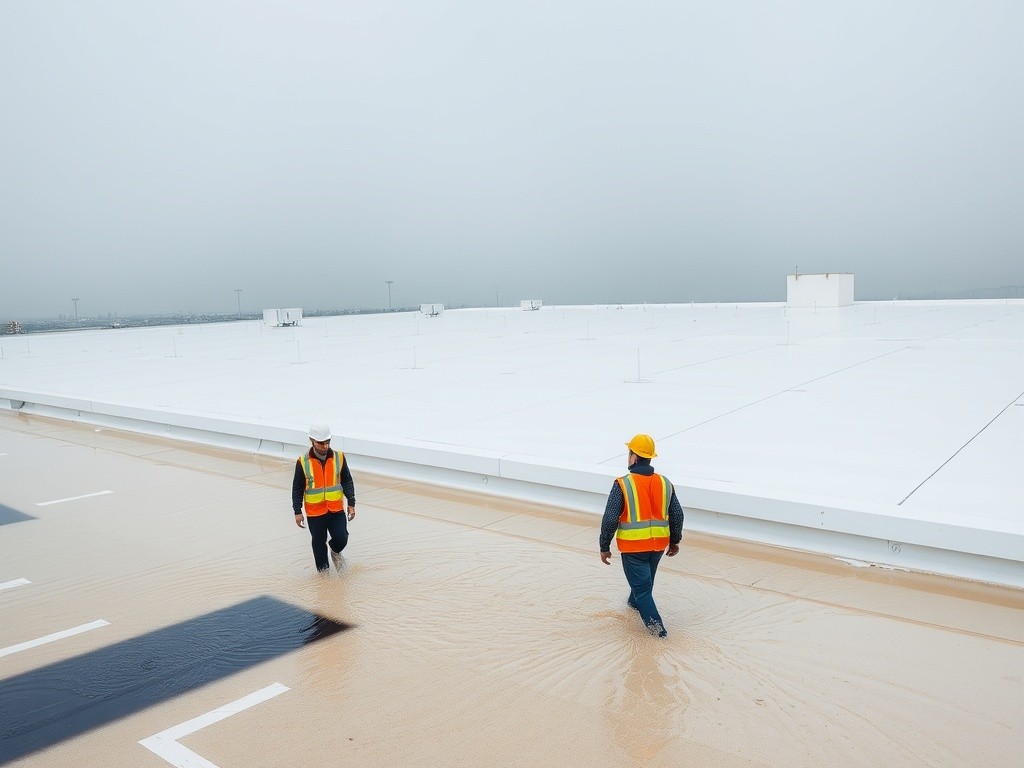
Cause #5: Rooftop Equipment and Penetrations
HVAC units, vents, pipes, and other rooftop features disrupt water flow and can create ponding issues.
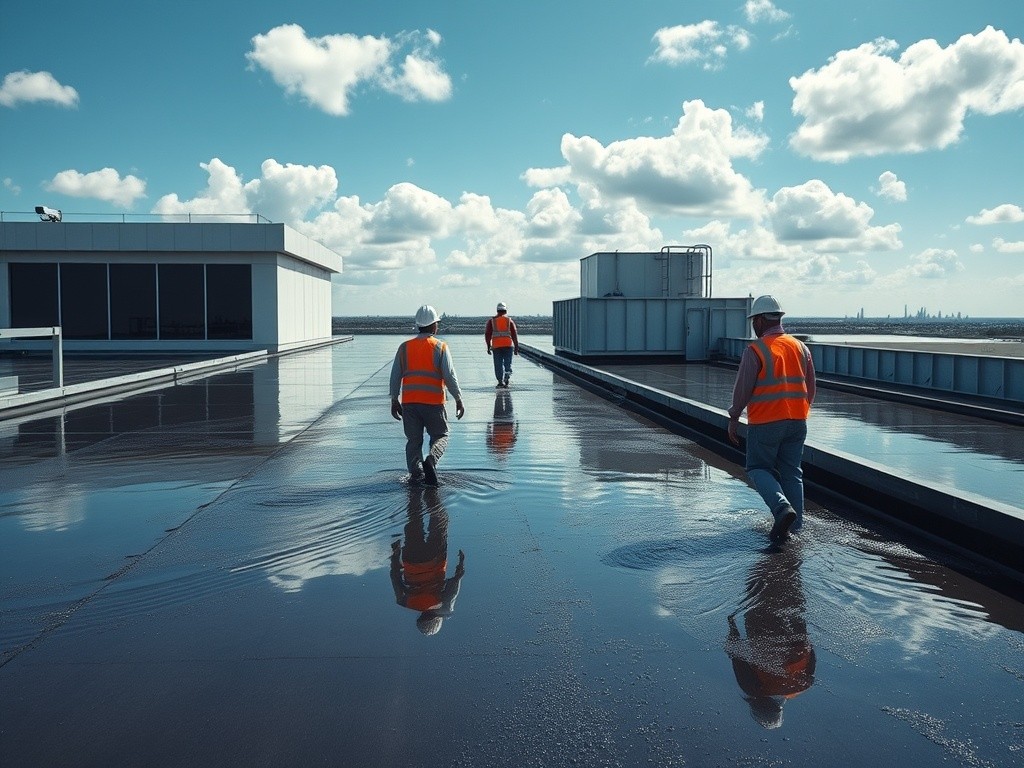
Equipment Blocking Drainage Paths: Large HVAC units, exhaust fans, and other equipment can obstruct natural water flow paths on the roof. Water that should flow toward drains instead backs up behind equipment, creating ponding areas.
This problem often develops when equipment is added to roofs after original construction without considering impact on drainage. The roof may have drained properly before equipment installation, but the added obstructions disrupt flow patterns.
Equipment installed on curbs should have proper crickets (sloped sections) that divert water around the equipment. Without crickets, water accumulates on the upslope side of curbs, unable to pass the obstruction.
Penetration Flashing Issues: Roof penetrations for pipes, vents, and conduits require flashing to maintain waterproofing. Improperly designed or installed flashing can create dams that trap water. Flashing that’s too tall relative to roof slope creates barriers water cannot overcome. Flashing installed without consideration for water flow direction can redirect water into areas where it ponds.
Solutions for Equipment-Related Ponding: For existing equipment causing drainage problems, several solutions exist. Installing crickets on the upslope side of equipment diverts water around obstructions. Raising equipment slightly on taller curbs can allow water to flow beneath it in some cases. Adding supplemental drains in areas where equipment blocks original drainage paths provides alternative water removal.
For new equipment installations, careful planning prevents ponding issues. Position equipment to avoid blocking drainage paths, specify proper crickets as part of equipment curbs, coordinate with roofing contractors to ensure drainage remains effective, and add drains if equipment will unavoidably impact drainage.
Cause #6: Roof Modifications and Additions
Changes made to roofs over time can inadvertently create ponding problems.
Membrane Repairs and Patches: Repair work that adds membrane layers creates slight elevation changes. Multiple repairs in the same area can build up thickness that redirects water flow in unintended ways. Heavy-handed application of patch materials creates bumps that disrupt drainage.
Added Insulation Layers: Energy efficiency upgrades sometimes add insulation layers over existing roof systems. If added insulation doesn’t maintain or improve roof slope, it can create ponding issues. Inconsistent insulation thickness from careless installation creates irregular surfaces that trap water.
Reroofing Over Existing Systems: Installing new roofing over old systems (roof-overs) can work well but requires careful attention to drainage. If the new assembly doesn’t match original slopes, ponding can develop. Multiple roof-overs compound these issues as thickness builds up unevenly.
Solutions: When modifications are necessary, proper planning prevents ponding. Professional roof contractors consider drainage implications of all work, maintain or improve existing slopes during repairs, use tapered materials where needed to preserve drainage, and add drains if modifications impact existing drainage patterns.
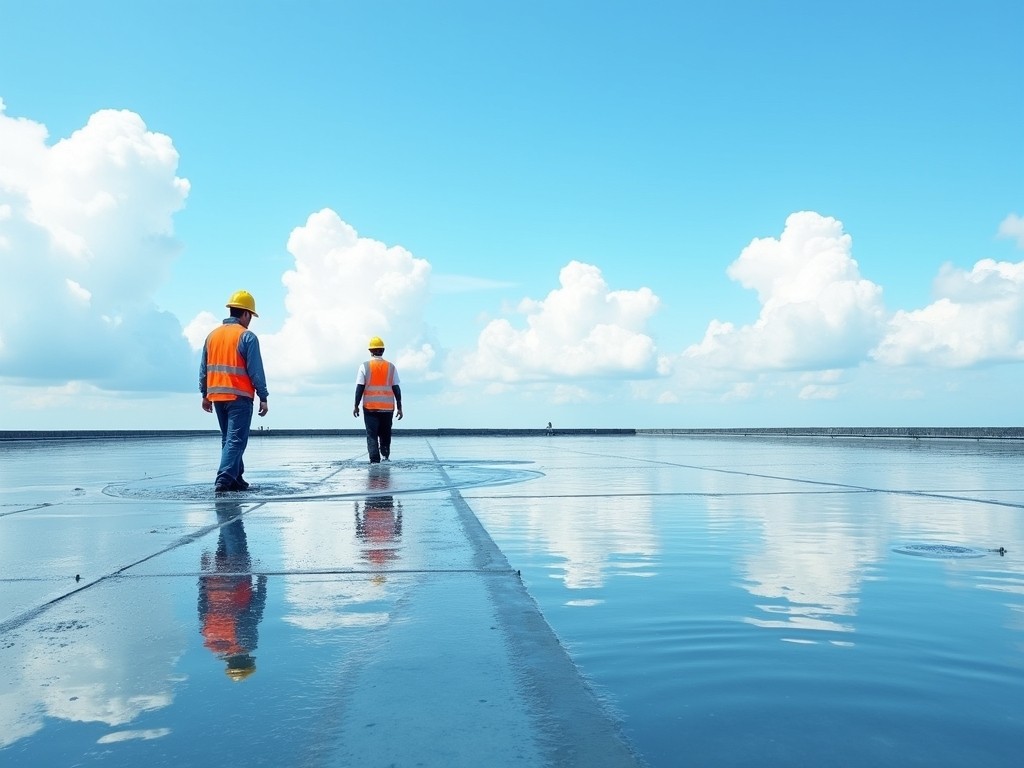
The Consequences of Ignoring Ponding Water
Understanding what happens when ponding water is left unaddressed reinforces why correction is essential.
Accelerated Membrane Deterioration: Standing water dramatically shortens roofing membrane life. Membranes in ponding areas often fail 5-10 years earlier than surrounding roof sections. The UV exposure, temperature cycling, and constant moisture contact break down membrane materials far faster than normal weathering.
Structural Damage: The weight of standing water stresses roof structures beyond design loads. Over time, this can cause progressive deflection that worsens the ponding in a destructive cycle. In extreme cases, excessive ponding loads have caused partial or complete roof collapse, creating catastrophic damage and serious safety hazards.
Interior Damage: When membranes in ponding areas eventually fail, water infiltration damages building interiors. Ceiling tiles, insulation, finishes, and contents suffer water damage. Mold growth in wet areas creates health concerns and expensive remediation requirements.
Increased Maintenance Costs: Roofs with ponding problems require more frequent repairs and attention. The ongoing maintenance costs of dealing with ponding-related problems often exceed the cost of properly correcting the underlying drainage issues.
Professional Assessment and Solutions
Addressing ponding water effectively requires professional expertise to identify root causes and implement lasting solutions.
Comprehensive Roof Evaluation: Professional assessment should include visual inspection of ponding areas and patterns, slope measurements using laser levels or surveying equipment, drainage system evaluation for capacity and condition, structural assessment for deflection or settlement, insulation condition evaluation through cores or thermal imaging, and documentation with photographs and measurements.
This comprehensive evaluation identifies all contributing factors – ponding usually results from multiple causes rather than a single issue.
Solution Development: Based on assessment findings, contractors can develop comprehensive solutions. These might include tapered insulation systems to create proper slopes, additional drains or scuppers where needed, structural reinforcement to address deflection, insulation replacement in compressed areas, equipment relocation or modification, and drainage system cleaning or upgrades.
Effective solutions address root causes rather than just symptoms. Simply adding drains without correcting inadequate slope, for example, may provide temporary improvement but won’t solve the underlying problem.
Preventive Measures: Beyond correcting existing ponding, preventive measures minimize future problems. Regular drain cleaning prevents blockage-related ponding, walkway pads protect insulation from traffic compression, proper equipment installation includes drainage considerations, routine inspections catch developing problems early, and prompt leak repairs prevent insulation saturation.
The Flat Roof Specialists: Ponding Water Solutions for North Carolina
For over two decades, The Flat Roof Specialists have helped North Carolina commercial property owners solve ponding water problems and restore proper roof drainage. Serving Raleigh, Durham, Greensboro, Winston-Salem, High Point, Burlington, Chapel Hill, Fayetteville, and throughout North Carolina, their team brings specialized expertise in diagnosing and correcting the complex issues that cause ponding.
Whether you need professional assessment of ponding causes, comprehensive solutions for drainage problems, tapered insulation systems to correct inadequate slope, or additional drains and structural modifications, The Flat Roof Specialists provide the expertise North Carolina businesses have trusted since 2000.
Their experience with all major commercial roofing systems means they understand how different roof types respond to ponding and what solutions work best for each situation. As a family-owned business with an A+ Better Business Bureau rating, they’re committed to honest assessment and effective solutions rather than temporary fixes.
Their licensed, bonded, and insured team provides professional expertise you can trust for protecting your commercial roofing investment from the damaging effects of ponding water.
Don’t Wait – Address Ponding Water Now
Ponding water problems rarely improve on their own – they almost always worsen over time. The sooner you address drainage issues, the less damage occurs and the more cost-effective solutions become.
If you observe water standing on your roof 48 hours after rainfall, notice ponding areas expanding or deepening over time, see membrane damage or deterioration in ponding areas, or have concerns about your roof’s drainage performance, professional assessment should occur promptly.
Early intervention prevents minor drainage issues from becoming major structural problems. The cost of correcting ponding through tapered insulation or additional drains is far less than repairing interior damage from membrane failure or addressing structural problems from prolonged water loading.
Contact The Flat Roof Specialists Today
 Whether you need professional evaluation of ponding causes on your commercial roof, expert solutions for persistent drainage problems, preventive measures to avoid future ponding issues, or emergency repairs for ponding-damaged roof areas, The Flat Roof Specialists bring the expertise and experience North Carolina commercial property owners need.
Don’t let ponding water destroy your roof and damage your building. Professional assessment and proper solutions protect your investment and ensure your roof performs reliably for its intended service life.
Contact The Flat Roof Specialists today to discuss your ponding water concerns and discover how their comprehensive approach to drainage problems can restore proper roof performance and protect your North Carolina business investment for years to come.