

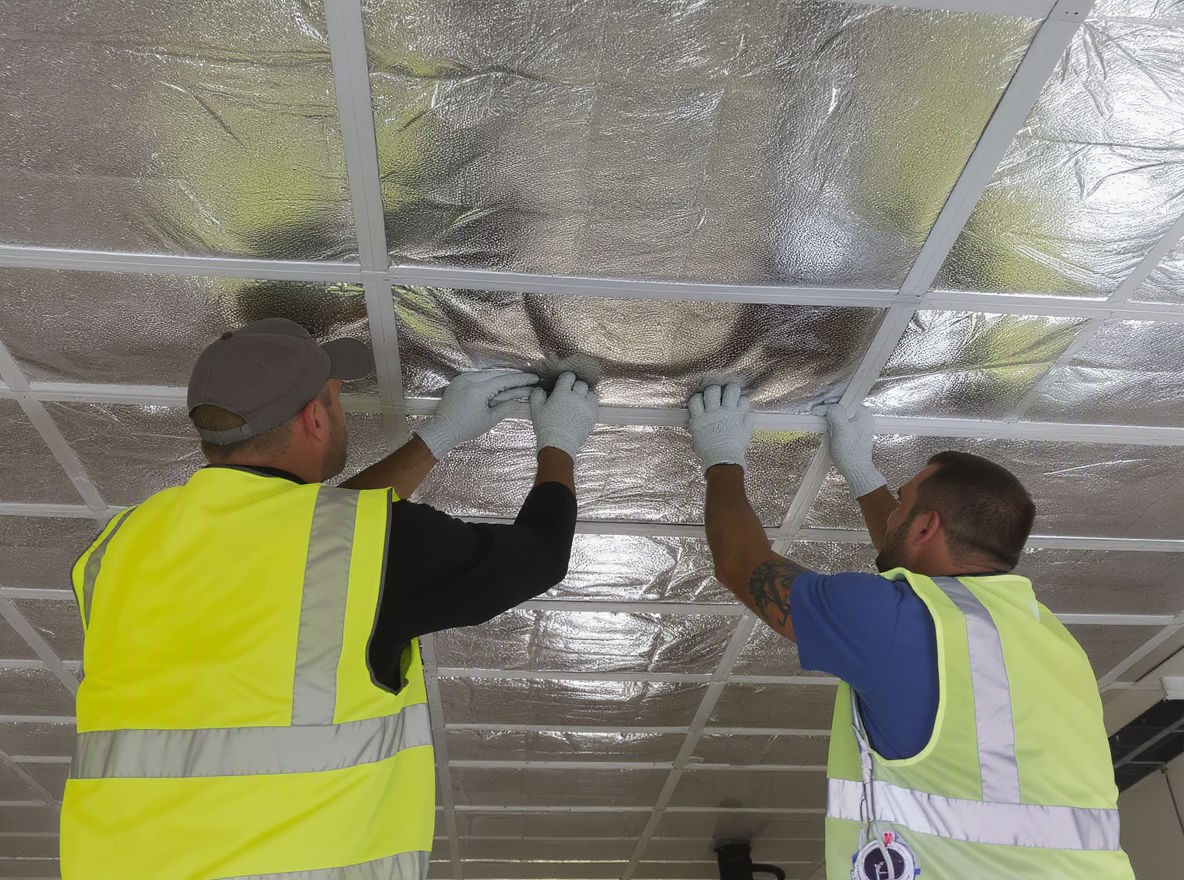
How to Insulate a Flat Roof from the Inside
TL;DR — Key Points:
- Interior insulation is a valid option — ideal when exterior membrane work isn’t feasible or budgeted
- Condensation risk is the primary concern — a proper vapor barrier is non-negotiable with interior insulation
- Three main methods — rigid foam board, spray foam, and batt insulation between joists each suit different situations
- R-value requirements vary by climate — NC, SC, TN, GA, and VA each have different minimum code requirements
- Interior height is sacrificed — interior insulation reduces headroom; plan thickness carefully
- Existing roof condition must be assessed first — insulating over a damaged or leaking roof traps moisture and accelerates decay
- Professional assessment recommended — the wrong approach can create costly moisture problems inside the roof structure
Insulating a flat roof from the inside is a practical solution for property owners who need to improve energy efficiency without disturbing the exterior roofing membrane. Whether you’re retrofitting an older commercial building in Raleigh, upgrading a flat-roofed home in Durham, or improving comfort in a warehouse in Greensboro, interior insulation can deliver meaningful energy savings when done correctly.
That said, interior insulation of a flat roof carries specific risks — particularly around moisture and condensation — that must be carefully managed. At The Flat Roof Specialists, we’ve been helping property owners throughout North Carolina, South Carolina, Tennessee, Georgia, and Virginia make smart decisions about their flat roofing systems for over 25 years. With more than 100 five-star reviews, we bring certified expertise to every project, both above and below the roof deck.
Why Insulate a Flat Roof from the Inside?
In most new construction, flat roof insulation is installed above the structural deck — between the deck and the waterproofing membrane. This “warm roof” configuration keeps the entire roof structure above the dew point and is the preferred modern approach.
However, interior insulation makes sense in several common scenarios:
- The exterior membrane is recently installed and in good condition, making exterior work unnecessary
- Budget constraints make a full exterior re-roofing project impractical right now
- The building is occupied and exterior disruption must be minimized
- Access to the roof exterior is difficult or restricted
- Energy bills are high and interior comfort is poor despite an intact roof
Property owners in Burlington, Chapel Hill, and Winston-Salem frequently ask us about this option as a cost-effective way to improve building performance without triggering a full roof replacement. It’s a legitimate approach — provided the right methods and materials are used.
The Critical Issue: Condensation and Vapor Control
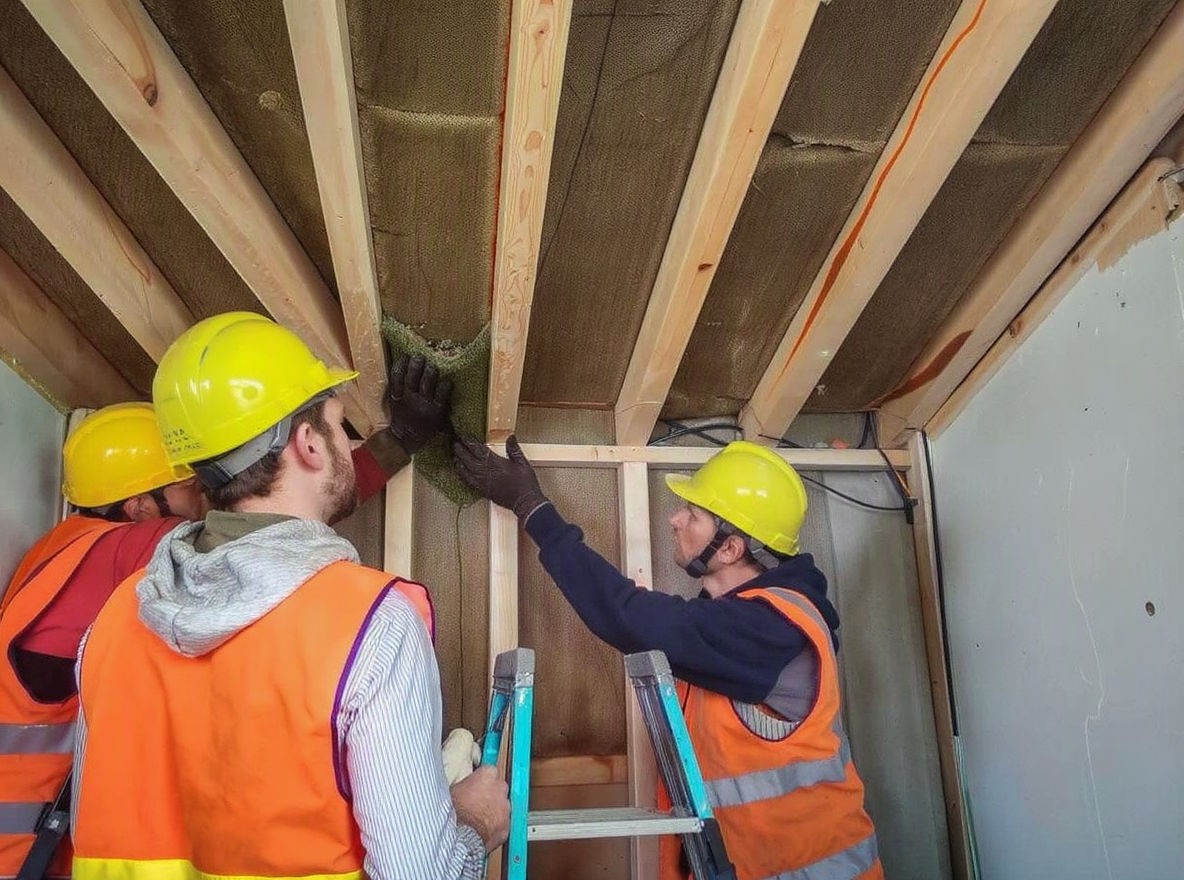
Before discussing methods, it’s essential to understand why interior flat roof insulation requires more careful planning than wall or floor insulation. In a flat roof, warm moist air from the building interior naturally rises and attempts to migrate upward through the roof assembly. When that warm air hits a cold surface — such as an uninsulated roof deck in winter — it condenses into liquid water.
This condensation, if not controlled, causes timber decay, corrosion of metal components, mold growth, and premature failure of the roofing system above. The solution is a continuous, well-sealed vapor barrier installed on the warm side of the insulation — between the living space and the insulation layer — to prevent moist air from reaching the cold deck above.
This is not a step that can be skimped on or skipped. Our teams have assessed buildings in High Point and Fayetteville where improperly installed interior insulation caused more structural damage than the original roofing problem it was meant to address. Get the vapor barrier right, or don’t insulate from the inside.
Assess the Roof Before You Begin
Interior insulation should never be installed over a roof that is already leaking or that has existing moisture trapped within the assembly. Doing so seals in that moisture, dramatically accelerating rot, mold, and structural deterioration.
Before any interior insulation work begins, have a professional roofing contractor conduct a thorough inspection of the exterior membrane, flashing, and drainage systems. At The Flat Roof Specialists, we provide comprehensive roof assessments throughout our five-state service area. We can confirm whether your roof is dry and sound — or identify repairs that must be completed first.
If moisture is already present in the roof assembly, it must be remediated before proceeding. This may involve removing saturated insulation from above, repairing the membrane, and allowing the structure to dry fully before any new insulation is installed.

Method 1: Rigid Foam Board Insulation
Rigid foam board is the most common and effective material for interior flat roof insulation. It offers high R-values per inch, inherent moisture resistance, and relatively straightforward installation. Three types are commonly used:
Polyisocyanurate (Polyiso)
Polyiso offers the highest R-value per inch of any commonly available rigid foam board — approximately R-6 to R-6.5 per inch. It is foil-faced on both sides, which also provides a degree of vapor resistance. Polyiso is the preferred choice when interior height is limited and maximum thermal performance is needed in minimum thickness.
Extruded Polystyrene (XPS)
XPS — often recognized by its blue, pink, or green color depending on manufacturer — provides around R-5 per inch and has excellent moisture resistance. It performs well in humid climates like those throughout our North Carolina and Georgia service areas and is a reliable choice for interior flat roof applications.
Expanded Polystyrene (EPS)
EPS is the most affordable rigid foam option at approximately R-3.8 per inch. While it has slightly lower moisture resistance than XPS, it is still a viable option for interior use when paired with a proper vapor barrier and when budget is a primary consideration.
Rigid foam boards are typically cut to fit between joists or applied continuously across the underside of the roof deck and held in place with mechanical fasteners or construction adhesive. For the best thermal performance, a continuous layer — avoiding thermal bridging at the joists — is preferable to insulation fitted only between framing members.
Method 2: Spray Foam Insulation
Closed-cell spray polyurethane foam (SPF) is arguably the most effective interior flat roof insulation solution available. It delivers R-6 to R-7 per inch, acts as its own vapor barrier when applied at sufficient thickness, adheres directly to the underside of the roof deck, and seals all gaps and penetrations simultaneously.
The air-sealing capability of spray foam is particularly valuable in flat roof assemblies, where even small gaps in conventional insulation can allow moist air to bypass the vapor barrier and reach the cold deck above. Spray foam eliminates this risk by creating a seamless, continuous thermal and vapor control layer.
The tradeoffs are cost — spray foam is significantly more expensive per square foot than rigid board — and the requirement for professional application. It cannot be applied as a DIY project safely or effectively. However, for commercial buildings in Raleigh, Durham, and throughout our service states where energy performance and moisture risk management are priorities, the investment in spray foam frequently pays for itself through reduced energy costs and avoided moisture damage.
Method 3: Batt Insulation Between Joists
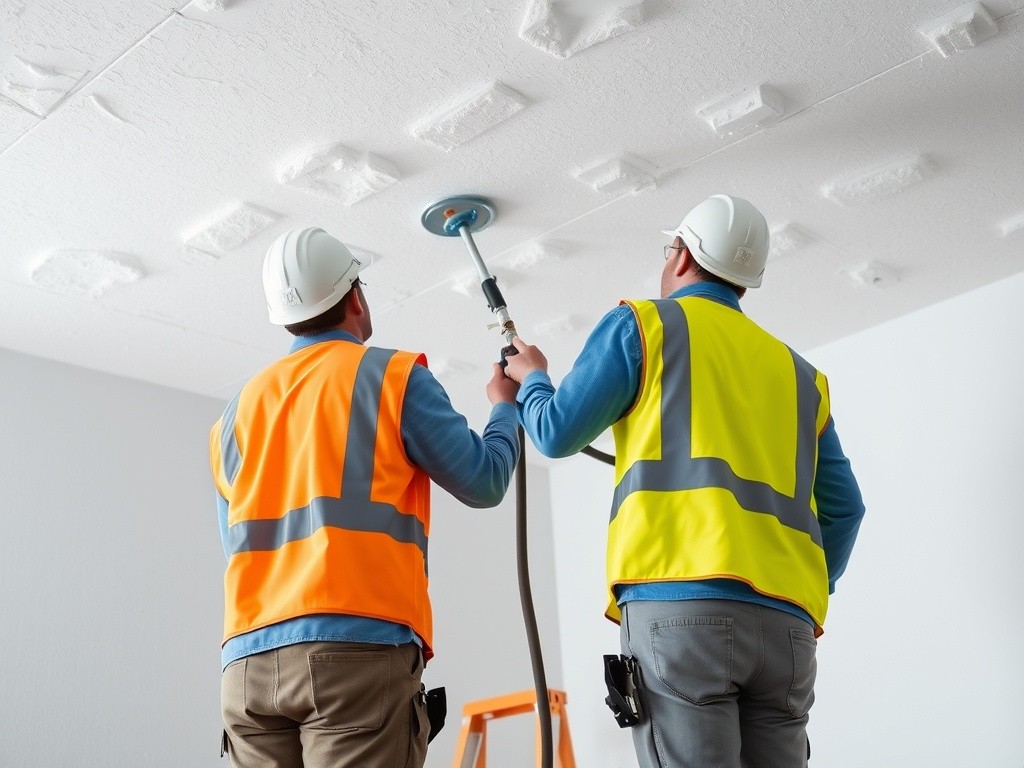
Mineral wool or fiberglass batt insulation fitted between flat roof joists is the lowest-cost interior insulation option. At around R-3 to R-4 per inch for fiberglass and R-3.7 to R-4.2 for mineral wool, batts provide reasonable thermal performance when depth allows.
However, batt insulation between joists has meaningful limitations in flat roof applications. It does nothing to address thermal bridging through the joists themselves — which can account for 20–30% of heat loss in a framed roof assembly. It also requires a very carefully installed vapor barrier on the warm side to prevent condensation, and any gaps or compressions in the batt significantly reduce its effectiveness.
For these reasons, batt insulation works best as a component of a hybrid system — for example, batts between joists combined with a continuous layer of rigid foam board below the joists — rather than as a standalone solution for flat roofs.
R-Value Requirements and Building Codes
Minimum insulation R-values for flat roofs are determined by local building codes based on climate zone. Our service states span multiple climate zones, and requirements vary accordingly:
- North Carolina (Raleigh, Greensboro, Winston-Salem) — Climate zones 3 and 4; minimum R-20 to R-38 for low-slope roofs depending on jurisdiction
- South Carolina — Primarily climate zone 3; similar minimums to coastal and Piedmont NC
- Georgia — Climate zones 2 and 3; R-20 minimum common in warmer southern areas
- Tennessee — Climate zones 3 and 4; R-30 or higher often required in mountain regions
- Virginia — Climate zones 4 and 5; R-30 to R-49 required in cooler northern areas
Always check with your local building department before beginning insulation work. Permits may be required, and inspections may be needed to verify that insulation and vapor control meet code before any new ceiling finish is applied.
Installation Best Practices
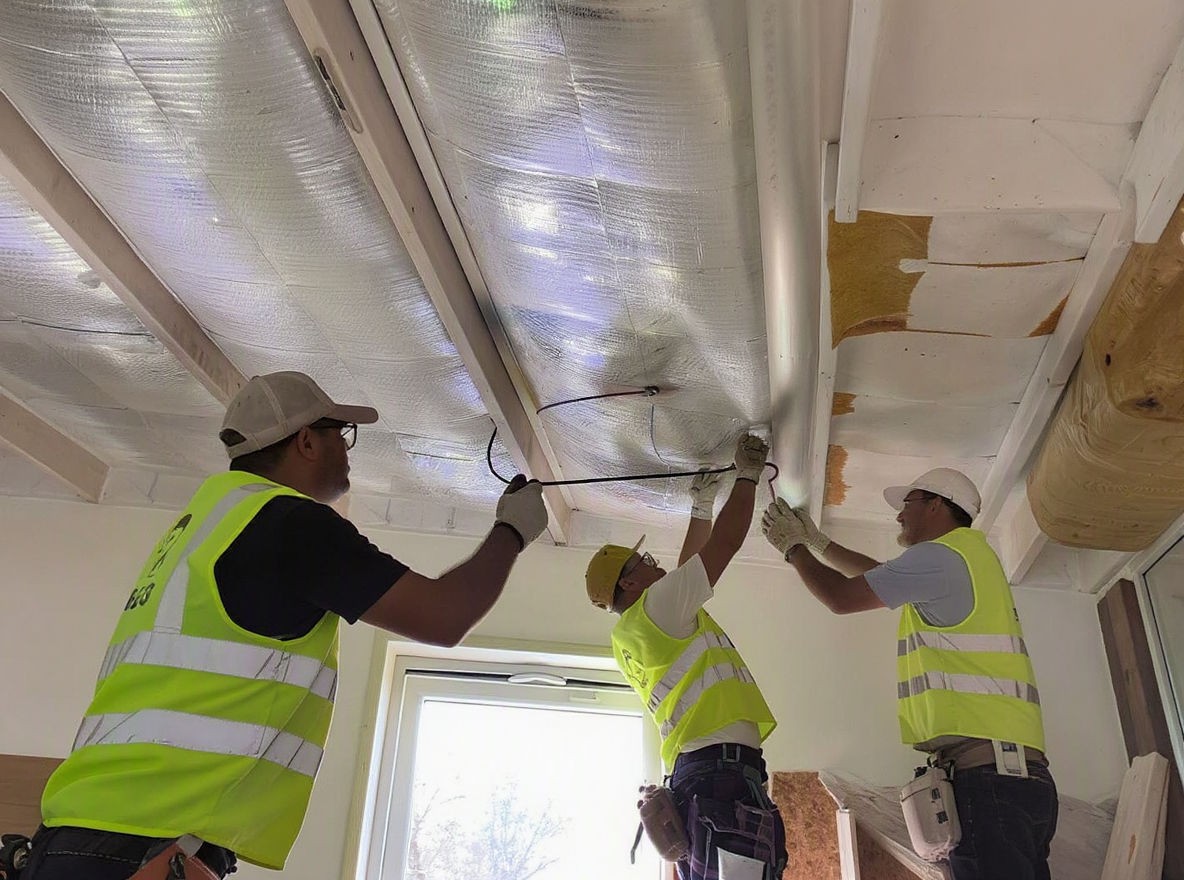
Regardless of which insulation method you choose, several best practices apply to all interior flat roof insulation projects:
- Inspect and repair the roof first — confirm the membrane is watertight and no existing moisture is present in the assembly
- Install vapor barrier on the warm side — this means below the insulation, facing the interior space; tape all seams and seal around all penetrations meticulously
- Aim for continuous insulation — minimize thermal bridging by running at least one layer of insulation continuously across joists
- Seal all air leaks — use foam sealant around pipes, conduits, and any penetrations through the assembly
- Maintain access to services — plan the insulation layer so that electrical and plumbing access is preserved where needed
- Account for headroom loss — every inch of insulation thickness reduces interior ceiling height; calculate carefully before committing to a system
When to Call the Professionals
Interior flat roof insulation is more forgiving than exterior roofing work in some ways — but the moisture risks mean that mistakes can be expensive and slow to manifest. By the time mold or rot becomes visible, significant structural damage may already have occurred.
We recommend involving a professional roofing contractor at minimum for the initial roof assessment and any exterior repairs needed before insulation work begins. For commercial buildings or larger residential flat roofs, professional installation of the entire insulation system ensures code compliance, warranty coverage, and long-term moisture performance.
At The Flat Roof Specialists, we are your certified and experienced commercial and residential roofing experts. We specialize in commercial flat roofing installation, repair, and maintenance, and also offer top-quality residential roofing services — especially if your home has a flat roof. Be sure to watch our YouTube videos, read our reviews, and check out our extensive gallery to see our recent work. We proudly serve Raleigh, Durham, Chapel Hill, Burlington, Greensboro, High Point, Winston-Salem, and Fayetteville, and install and maintain flat roofs throughout NC, SC, TN, GA, and VA.
Give us a call today at (919) 834-7663 to request a quote or schedule a roof assessment before your insulation project gets underway.