

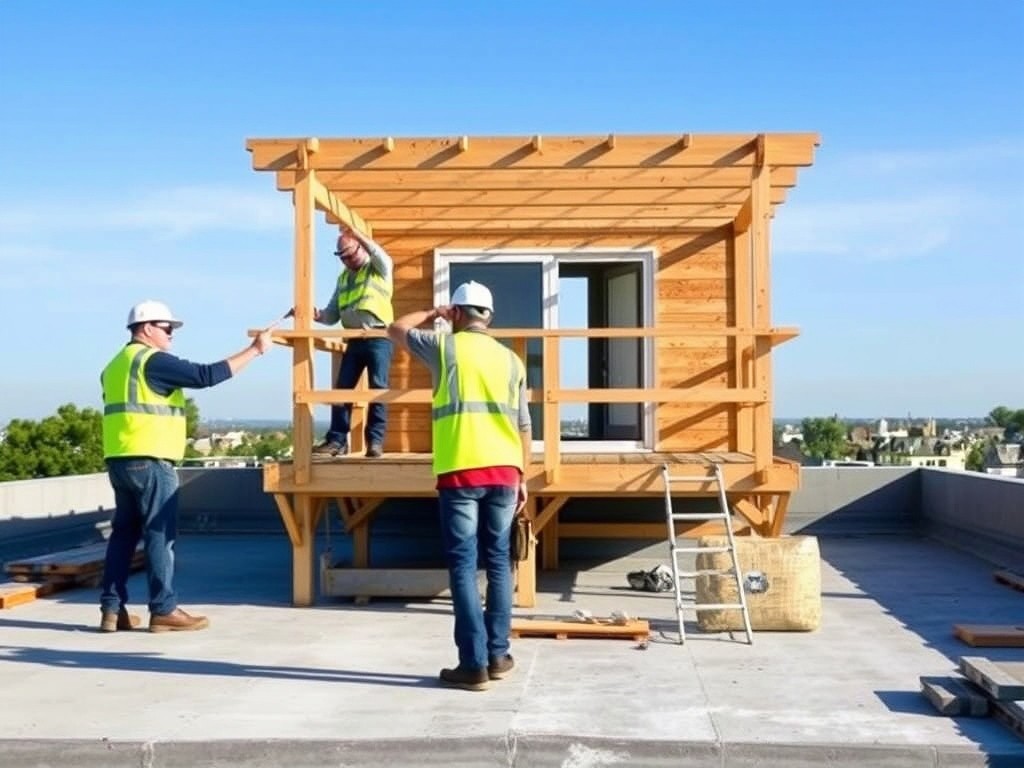
How to Build a Deck on a Flat Rubber Roof
TL;DR – Key Points:
- Professional assessment required first – Structural capacity, membrane condition, and drainage must be evaluated before any deck construction
- Protect the EPDM membrane – Use non-penetrating, ballasted deck systems whenever possible to preserve roof integrity
- Weight distribution is critical – Decking systems must spread load evenly to avoid concentrated stress on the roof membrane
- Drainage cannot be compromised – Deck design must maintain proper water flow and access to drains
- Building permits typically required – Check local codes before beginning any construction
- Work with roofing professionals – Coordinate deck installation with your roofing contractor to protect warranties and roof integrity
A rooftop deck on a flat rubber roof can transform otherwise unused space into a beautiful outdoor living or commercial entertainment area. However, building a deck on an EPDM rubber roof requires careful planning, the right materials, and a thorough understanding of how to protect the roof membrane throughout the process. At The Flat Roof Specialists, we’ve helped property owners throughout North Carolina, South Carolina, Tennessee, Georgia, and Virginia navigate rooftop deck projects safely and successfully for over 25 years.
Step 1: Assess Structural Capacity and Roof Condition
Before any planning or construction begins, two critical evaluations must take place. First, a structural engineer should assess whether the building can support the additional weight of a deck, furniture, occupants, and any other loads. Residential buildings and commercial structures vary widely in their load-bearing capacity, and exceeding those limits creates serious safety risks.
Second, your EPDM rubber roof must be in excellent condition before any deck is installed on top of it. Repairing an EPDM roof beneath an existing deck is significantly more difficult and expensive than repairing it beforehand. Our team strongly recommends scheduling a professional roof inspection prior to deck construction. If your membrane has existing punctures, failing seams, or drainage issues, these must be corrected first. The Flat Roof Specialists serve property owners throughout Raleigh, Durham, Greensboro, and beyond — give us a call at 919-834-7663 to schedule your pre-deck roof assessment.
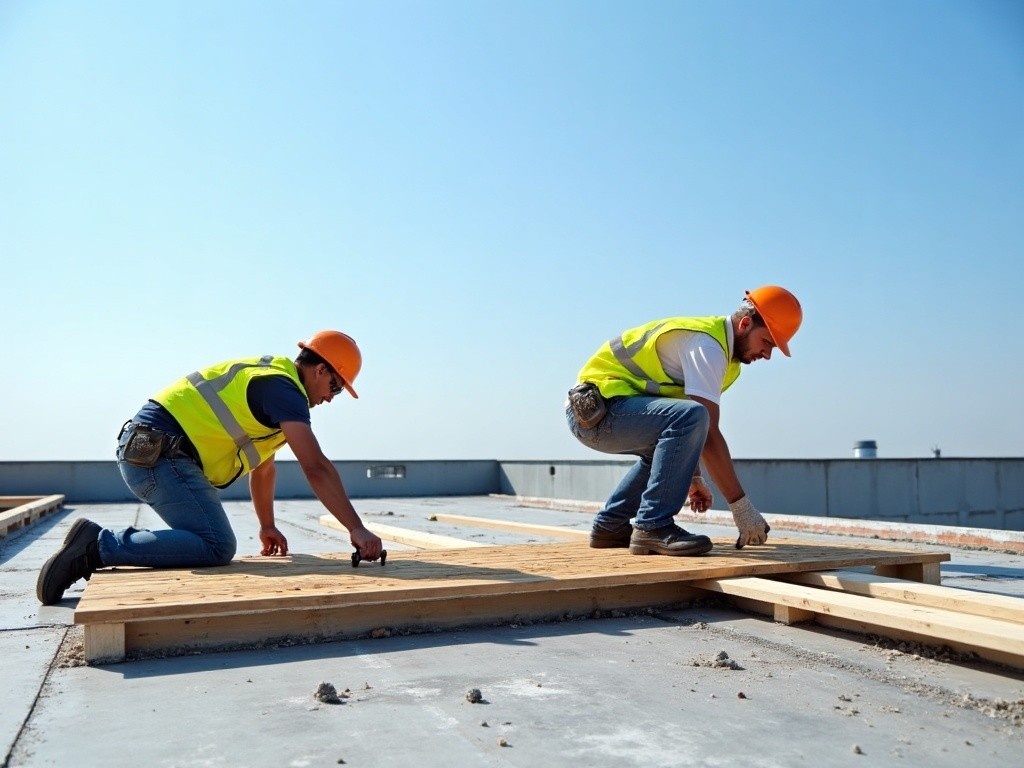
Step 2: Choose the Right Deck System
The deck system you choose has a major impact on your rubber roof’s long-term performance. There are two primary approaches:
Ballasted (Non-Penetrating) Deck Systems
This is the preferred method for EPDM roofs. Ballasted systems use weighted pedestals or pavers to hold decking in place without penetrating the rubber membrane. Adjustable pedestals — typically made of plastic or composite materials — sit directly on the EPDM surface and support deck tiles or wooden planking above. Because they don’t pierce the membrane, they eliminate the risk of creating new leak points.
Pedestal deck systems also allow easy access to the roof membrane for inspection and maintenance, which is essential for preserving your roof warranty and catching potential issues early.
Mechanically Fastened Systems
In some cases, mechanical fastening may be necessary for wind uplift requirements or structural reasons. When penetrations are unavoidable, every single fastener point must be sealed with appropriate EPDM-compatible materials and flashing. This work should always be performed or supervised by an experienced roofing contractor to prevent leaks and warranty voidance.
Step 3: Plan for Drainage and Membrane Protection
One of the most common mistakes in rooftop deck construction is blocking drainage. Your EPDM roof’s drainage system must remain fully functional after the deck is installed. This means designing the deck layout to keep drains and scuppers completely accessible and unobstructed.
Additionally, EPDM rubber is vulnerable to puncture from sharp objects, concentrated point loads, and certain chemicals. Place a protective layer — such as a rubber mat, insulation board, or roofing-grade protection course — beneath pedestal systems to further guard the membrane from abrasion and impact over time.
Be mindful of what materials come into contact with your EPDM roof. Some wood treatments, adhesives, and chemical cleaners are incompatible with rubber membranes and can cause deterioration. Always verify compatibility before use.
Step 4: Select Appropriate Decking Materials
Weight is a constant concern with rooftop decks, so material selection matters enormously. Lightweight composite decking, aluminum decking, and certain hardwoods like ipe or teak offer excellent durability without excessive weight. Composite deck tiles that interlock and sit on pedestals are among the most popular choices for rooftop applications because they’re lightweight, low-maintenance, and easy to remove for roof access.
Avoid heavy materials like concrete pavers on pedestal systems unless a structural engineer has specifically verified the load capacity. Even weight distribution across the deck surface is just as important as total weight.
Step 5: Permits, Codes, and Professional Coordination
Most jurisdictions require building permits for rooftop deck construction, and local codes govern everything from railing heights and structural requirements to fire egress. In North Carolina — including cities like Chapel Hill, Burlington, High Point, and Winston-Salem — always check with your local building department before construction begins.
Most importantly, coordinate every phase of deck installation with your roofing contractor. Deck construction that damages the membrane or voids manufacturer warranties can leave you financially responsible for costly repairs that insurance won’t cover.
At The Flat Roof Specialists, we work alongside contractors and property owners to ensure that rooftop improvements don’t compromise the integrity of your roof system. With over 25 years of experience and more than 100 five-star reviews, we’re the trusted flat roofing experts across North Carolina, South Carolina, Tennessee, Georgia, and Virginia. Call us today at (919) 834-7663 to request a quote or schedule a consultation before your rooftop deck project gets underway.