

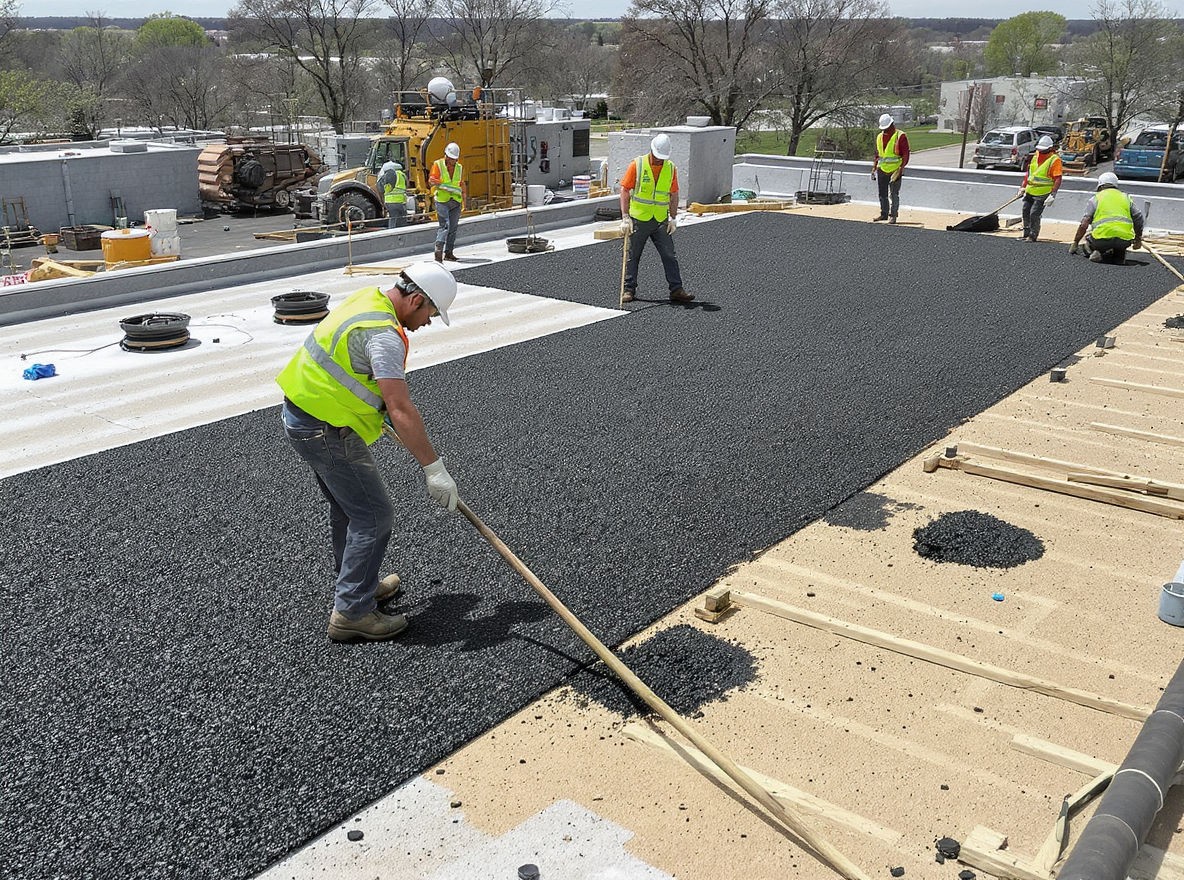
How to Build a Flat Roof
TL;DR — Key Points:
- Flat roofs aren’t truly flat — a minimum 1/4” per foot slope is required for proper drainage
- Structural planning comes first — rafters, decking, and load capacity must be engineered before any membrane goes down
- Insulation placement matters — warm roof (insulation above deck) vs. cold roof (below) affects performance significantly
- Membrane selection is critical — TPO, EPDM, and PVC each suit different budgets, climates, and building types
- Drainage must be designed in, not retrofitted — drains, scuppers, and slope direct water away from the structure
- Flashing and edge details make or break the system — most leaks originate at transitions and penetrations
- Professional installation is strongly recommended — DIY flat roofing errors are costly and rarely covered by warranties
Building a flat roof is a multi-stage construction project that demands precision at every step. While the term “flat roof” sounds straightforward, these systems involve careful structural planning, material layering, waterproofing, and drainage engineering that differ significantly from pitched roof construction. At The Flat Roof Specialists, we’ve been installing and maintaining flat roofs across North Carolina, South Carolina, Tennessee, Georgia, and Virginia for over 25 years — and we know firsthand how much the details matter.
This guide walks through the core steps involved in building a flat roof, whether you’re planning a new commercial structure or adding a flat-roofed addition to an existing building. If you’re in Raleigh, Durham, Greensboro, Winston-Salem, or anywhere in our service area and need professional guidance, give us a call at 919-834-7663 to request a quote.
Step 1: Design and Structural Planning
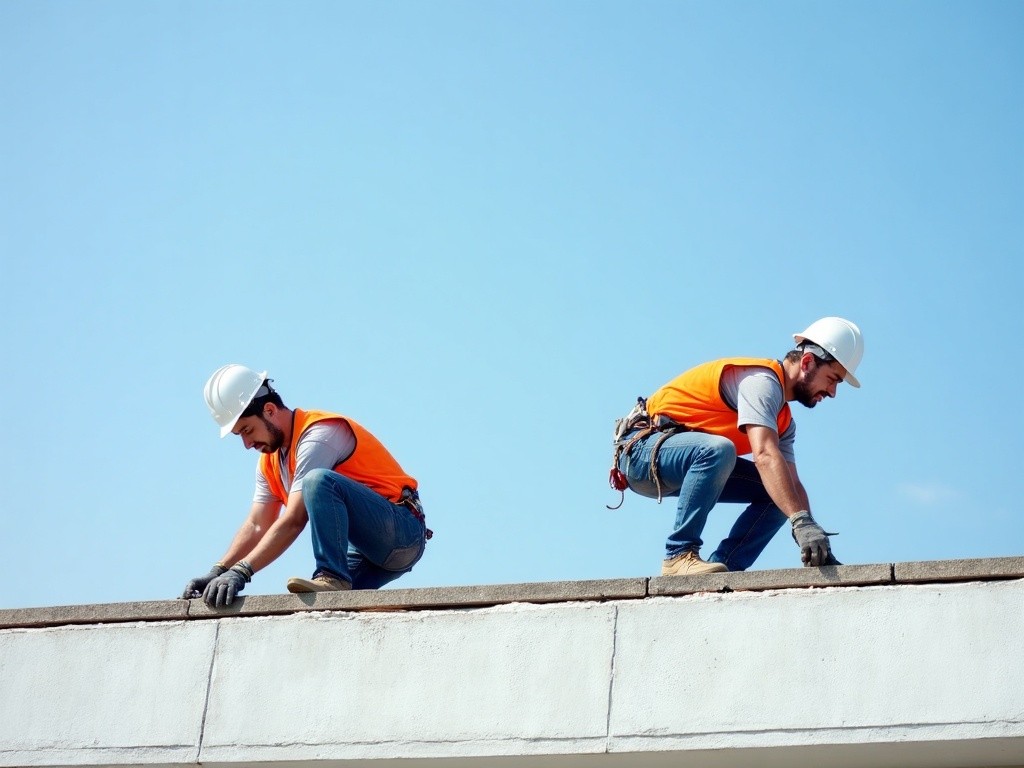
Before a single board is cut, a flat roof must be engineered with load capacity in mind. Unlike sloped roofs that shed water and snow quickly, flat roofs must support the sustained weight of standing water, snow accumulation, rooftop equipment, and maintenance foot traffic.
Work with a licensed structural engineer to determine rafter or joist sizing, spacing, and span requirements. In most residential and light commercial applications, flat roof rafters run at 16” or 24” on center depending on the load requirements and span. The structural deck — typically 3/4” tongue-and-groove plywood or oriented strand board (OSB) — must be properly rated for the intended load and climate.
Critically, the deck must be designed with slope built in. A true “flat” roof will pool water and fail quickly. The minimum accepted slope for a flat roof is 1/4 inch per foot, and many modern systems recommend 1/2 inch per foot for better drainage performance. This slope can be achieved through tapered insulation above the deck or by cutting the rafters at a slight angle during framing.
Step 2: Vapor Barrier and Insulation
Once the structural deck is in place, a vapor barrier is typically applied to prevent moisture from migrating upward from the building interior into the insulation and roofing system. This step is especially important in climates with high humidity — a characteristic well-known to property owners in Chapel Hill, Fayetteville, and coastal areas throughout our service region.
Flat roofs use one of two insulation configurations:
- Warm roof — insulation is placed above the structural deck and below the waterproofing membrane. This is the more common modern approach and protects the structure from thermal movement.
- Cold roof — insulation is placed between the rafters below the deck, similar to a conventional attic. This approach requires careful ventilation design to prevent condensation buildup.
Polyisocyanurate (polyiso) board is the most commonly used flat roof insulation due to its high R-value per inch. Extruded polystyrene (XPS) is also widely used, particularly in applications requiring moisture resistance. Insulation boards are mechanically fastened or adhered to the deck in staggered layers to eliminate thermal bridging at joints.
Step 3: Drainage System Installation
Drainage is one of the most consequential elements of any flat roof system. Before the waterproofing membrane is installed, internal roof drains, scuppers, or gutters must be positioned at the roof’s lowest points — where the designed slope directs water to collect.
Internal drains connect to the building’s plumbing system and are common on large commercial roofs. Scuppers are openings through parapet walls that allow water to exit at the roof edge and are a popular choice for both commercial and residential flat roofs in Burlington, High Point, and Greensboro. Overflow drains or secondary scuppers are required by most building codes to handle water if primary drains become blocked.
Getting drainage right at this stage is non-negotiable. Retrofitting drainage after a membrane is installed is expensive and disruptive. Poor drainage is the single leading cause of premature flat roof failure across every material type.
Step 4: Selecting and Installing the Membrane
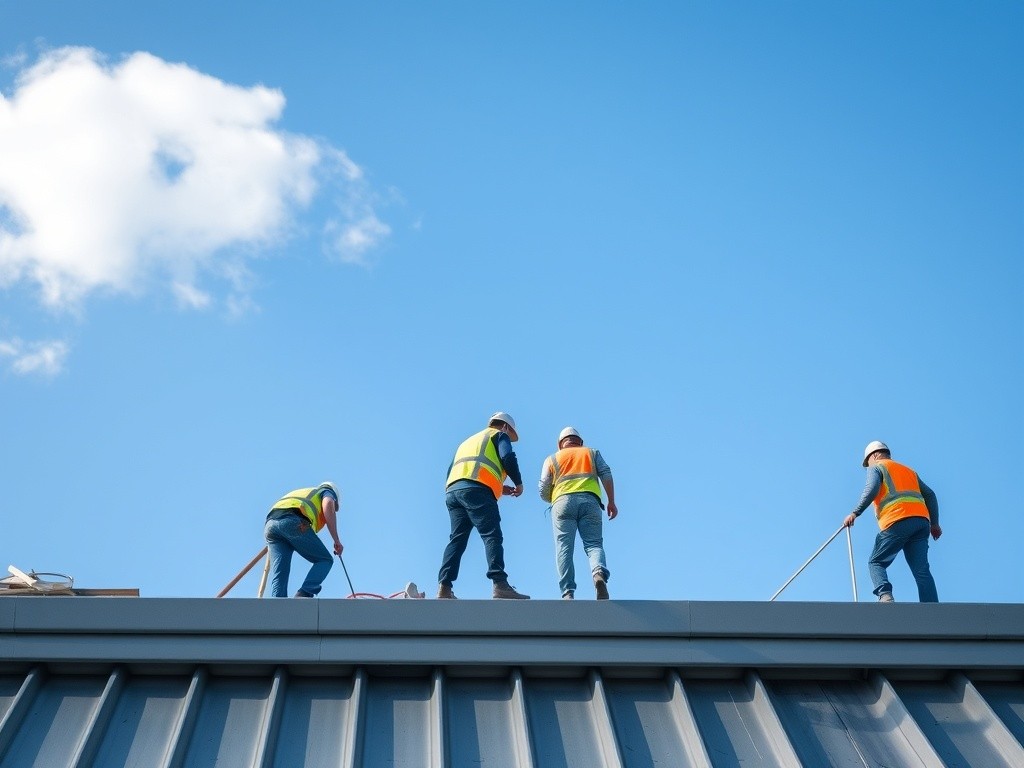
The waterproofing membrane is the heart of a flat roof system. Three materials dominate the modern commercial and residential flat roofing market:
- TPO (Thermoplastic Polyolefin) — The most popular choice today. White, heat-weldable seams, excellent energy efficiency, and competitive cost make it ideal for most commercial and residential applications across our service states.
- EPDM (Ethylene Propylene Diene Monomer) — A proven rubber membrane with a track record spanning decades. Excellent for temperature fluctuation resistance and particularly cost-effective for large roof areas.
- PVC (Polyvinyl Chloride) — The premium tier. Superior chemical resistance and seam strength make it the go-to choice for restaurants, industrial facilities, and demanding commercial environments.
Membranes are installed using one of three attachment methods: fully adhered (glued directly to the insulation), mechanically fastened (screwed through the insulation into the deck), or ballasted (held in place by gravel or pavers). Each method has specific advantages depending on wind uplift requirements, building type, and climate.
Seams — where membrane sheets overlap and join — are the most critical installation detail. TPO and PVC seams are heat-welded using hot air guns, creating bonds as strong as the membrane itself. EPDM seams use tape and adhesive systems. Seam quality is a major differentiator between professional installation and DIY attempts, and it’s where most long-term leaks originate.
Step 5: Flashing, Edge Details, and Penetrations
Once the field membrane is installed, every transition, edge, and penetration must be meticulously detailed. Flashing seals the membrane at parapet walls, curbs, HVAC equipment, skylights, vents, and drain collars. These transitions are the most vulnerable points in any flat roof system — studies consistently show that the overwhelming majority of flat roof leaks originate at flashing and edge details, not in the field membrane itself.
Parapet walls require membrane to run up the vertical face and terminate under a coping cap. Roof edges without parapets use metal edge terminations that hold the membrane mechanically and provide a clean, weathertight finish. Every penetration — whether a pipe, conduit, or HVAC curb — requires its own prefabricated or field-fabricated flashing boot that integrates with the surrounding membrane.
This is the stage where professional expertise has the greatest impact on long-term roof performance. Our certified technicians serving Raleigh, Durham, and throughout our five-state service area bring over 25 years of flashing experience to every project — and our 100+ five-star reviews reflect the difference that precision detail work makes.

Step 6: Inspection and Ongoing Maintenance
A newly built flat roof should be inspected immediately upon completion to verify seam integrity, flashing details, drainage flow, and membrane adhesion. Most manufacturer warranties require a post-installation inspection by a certified contractor to activate coverage.
From there, a proactive maintenance program is the single most effective way to protect your investment. Bi-annual inspections — ideally in spring and fall — catch minor issues like small membrane separations, debris-blocked drains, or storm damage before they become major repairs. Our Commercial Roofing Protection Plans are designed specifically for this purpose, offering scheduled inspections, preventive maintenance, and priority emergency response for properties throughout Winston-Salem, High Point, and our full multi-state coverage area.
At The Flat Roof Specialists, we specialize in commercial flat roofing installation, repair, and maintenance, and also offer top-quality residential roofing services, especially if your home has a flat roof. Be sure to watch our YouTube videos, read our reviews, and check out our gallery to see our recent work. Ready to discuss your project? Call us today at (919) 834-7663 to request a quote.